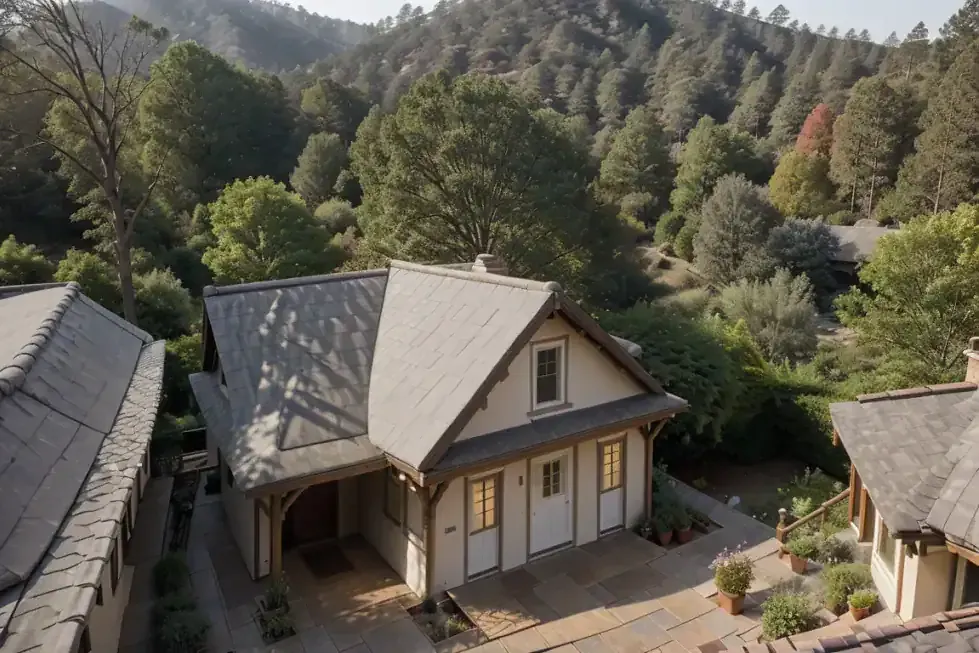
Compare written scopes for the same repair area and material system.
A lower total can reflect omitted flashing, underlayment or decking work, so ask each provider to identify exclusions before you decide.
A ceiling stain shows where moisture became visible, not necessarily where it entered.
Water can travel along framing before it drips indoors, so roof leak detection should examine the path between the stain and suspected entry points.
Ask the provider to inspect pipe boots, step flashing and valley intersections.
Roof cement over a visible gap may leave deteriorated underlayment or concealed decay untouched; request photographs and an explanation of the proposed repair boundary.
Roof replacement deserves consideration when end-of-life wear affects several areas or repeated leaks involve the underlying assembly.
A roof inspection should distinguish isolated damage from widespread deterioration before you compare repair and replacement scopes.
Ask whether granule loss accompanies brittle shingles, exposed reinforcement or widespread cracking.
Decking that begins to sag requires assessment; a surface patch cannot restore structural support or explain why framing has started to settle.
Compare materials against roof pitch, existing support and the installation details your provider proposes.
Appearance alone does not establish suitability, and a change in roof covering can require changes beneath the visible surface.
Roof ventilation and insulation should be assessed together because airflow alone cannot correct missing insulation or indoor air leakage.
Ask the provider how intake openings and exhaust vents would work with your existing attic.
Green roofing choices can include retaining serviceable materials or selecting a compatible reflective surface.
A planted roof needs structural and waterproofing assessment; ask for evidence of suitability rather than assuming every energy-efficiency option fits your home.
Gutter installation and skylight installation affect how roof water moves around edges and openings.
Ask the provider to explain connections to the existing roofing assembly, especially where replacement work could disturb flashing or underlayment.
For fascia soffit repair, establish whether gutter overflow or concealed leakage caused the damage.
For a skylight leak, ask whether the problem involves glazing seals, surrounding flashing or the roof above before agreeing to replacement.
Call About Roofing Now
Call (415) 753-4712