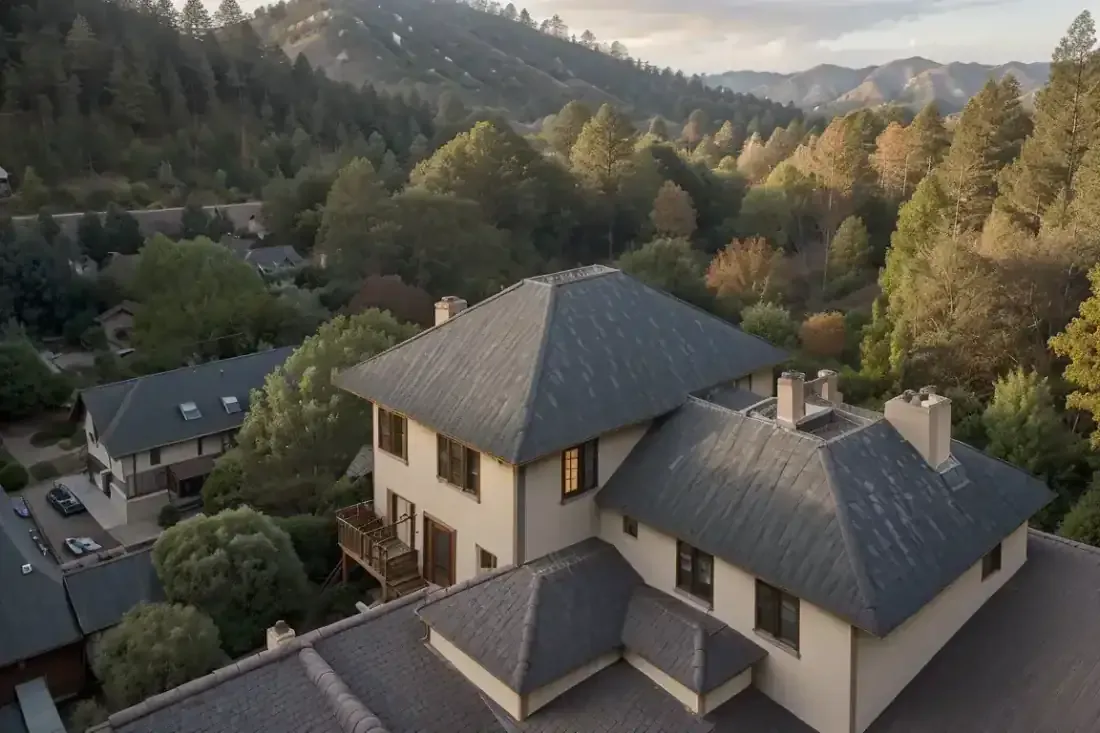
Roof financing is a way for homeowners in Mill Valley, CA, to spread roof repair or replacement costs over time.
Before choosing a payment plan, compare the written construction scope with the separate borrowing terms.
A Mill Valley roofing contractor estimate and a loan agreement answer different questions: what work you are buying and what borrowing will cost.
Financing availability, lender participation and approval must be confirmed directly; this page does not establish a financing offer.
Call (415) 753-4712 for roof repair inquiries
Roof financing should start with an itemised scope, because a loan amount cannot tell you whether flashing, disposal or hidden deck repairs are included.
Ask the provider to distinguish fixed-price work from allowances and exclusions before you submit a borrowing application.
Keep construction costs separate from borrowing costs. Application charges, interest and other lender fees may change the amount you repay without adding anything to the roof.
Ask whether charges are financed into the balance or paid separately.
Roof costs depend on measured roof area, roof pitch and the condition beneath the covering.
For a Mill Valley property, the estimate should also explain how access and protection against winter heavy rain affect handling, temporary protection and the proposed sequence.
Do not infer deck condition from a home's age or appearance. Previous additions, patched valleys and different roof levels can change quantities and junction details.
Ask the provider to measure these conditions rather than use a general allowance without explanation.
High wind and falling trees can create damage beyond missing shingles.
Ask whether the roof inspection includes visible structural concerns and whether specialist assessment would be a separate expense before financing the proposed repair.
Roof payments can come from savings, a staged construction agreement or third-party borrowing.
Compare the same scope under each arrangement, and keep enough flexibility for documented changes.
A smaller monthly payment can still produce a larger total repayment over a longer term.
Ask whether the quoted construction price changes with the payment method. Compare annual percentage rate, repayment term and total payments together.
Do not judge affordability from the monthly figure while leaving fees or a final balloon payment out of your calculation.
Roof financing applications and construction checks require different records. A lender evaluates repayment and identity, while the contractor needs property access and agreement on the work.
Ask each recipient what is necessary before sending sensitive documents through its verified application channel.
Confirm who handles permit applications and required inspections before signing. If ownership is shared, ask whose signatures are needed.
For commercial roofing, clarify who has authority to approve the work and borrowing rather than assuming an occupant can authorize both.
Keep copies of the signed scope, financing disclosures and later change orders together.
A lender's approval does not verify installation details, establish insurance coverage for a storm claim or replace your review of the contractor's documents.
Roof insurance and roof financing solve different problems: a claim asks whether a covered event caused damage, while financing provides borrowed funds.
After storm damage, contact the insurer about policy requirements before treating the entire repair estimate as a borrowing need.
Ask the insurer about the deductible, payment timing and documentation requirements.
If you borrow while a claim remains unresolved, confirm that you can meet the loan payments without relying on an expected settlement that has not been approved.
Roof agreements should explain how the price, payment dates and responsibilities can change.
Read the construction contract and lending agreement separately, then check that their schedules work together.
Ask for answers in writing before authorizing work or accepting a loan.
Ask how the provider handles a disputed item without releasing funds for unfinished work.
If financing proceeds are insufficient after an approved change, pause to agree on funding rather than letting an undocumented balance accumulate.
Roof financing decisions become easier when you separate the repair need from the borrowing decision.
Use these answers to prepare questions for the provider and lender; the signed agreements determine your actual obligations.
No. The published line accepts roofing inquiries in Mill Valley. A call does not establish loan availability, an interest rate or credit approval.
Ask any proposed lender for its application requirements and written disclosures before deciding whether to apply.
Ask the lender about eligible projects and borrowing minimums.
First obtain a roof inspection and a defined repair scope; financing a larger project does not establish that replacement is necessary.
Obtain the scope first where practical. Roof pitch, existing layers and concealed damage can change the amount needed.
Ask how the lender handles a revised contract price before accepting funds.
Do not assume it does. Ask for the provider's written warranty terms and any manufacturer requirements separately.
The loan repayment schedule does not describe coverage for installation defects or material problems.
Call About Your Roof
Call (415) 753-4712