Roofing Services Providers Offer
Each service below has its own page covering scope, what changes the estimate, and how to verify the work in writing.
- Roof Repair — Mill Valley Roof Repair: replacing damaged shingles and failed flashing can stop water entry, but the provider should first trace moisture beyond the
- Roof Inspection — Mill Valley Roof Repair inquiries about roof inspection should start with a request for photos of flashing, roof coverings and accessible attic condit
- Roof Replacement — Mill Valley Roof Repair: before replacing worn shingles, ask the provider to inspect the exposed roof deck for rot and damaged sheathing.
- Gutter Installation — Mill Valley Roof Repair: properly pitched gutters and correctly sized downspouts direct roof runoff away from your foundation instead of letting it sp
- Metal Roofing — Mill Valley Roof Repair: before replacing metal panels, ask your provider whether leaks come from failed fastener washers or open flashing joints; sou
- Roof Leak Detection — Mill Valley Roof Repair: roof leak detection should trace water uphill from your ceiling stain before a provider recommends patching shingles or flash
- Storm Damage Repair — Mill Valley Roof Repair: ask your provider to secure storm-opened roof areas with temporary tarps before replacing damaged shingles or flashing.
- Commercial Roofing — Mill Valley Roof Repair: before patching a commercial roof leak, ask the provider to check membrane seams, drain outlets and wet insulation so trapped
- Insurance Claim Assistance — Mill Valley Roof Repair inquiries about insurance claim assistance should start with dated damage photos and an itemised repair scope, so you can comp
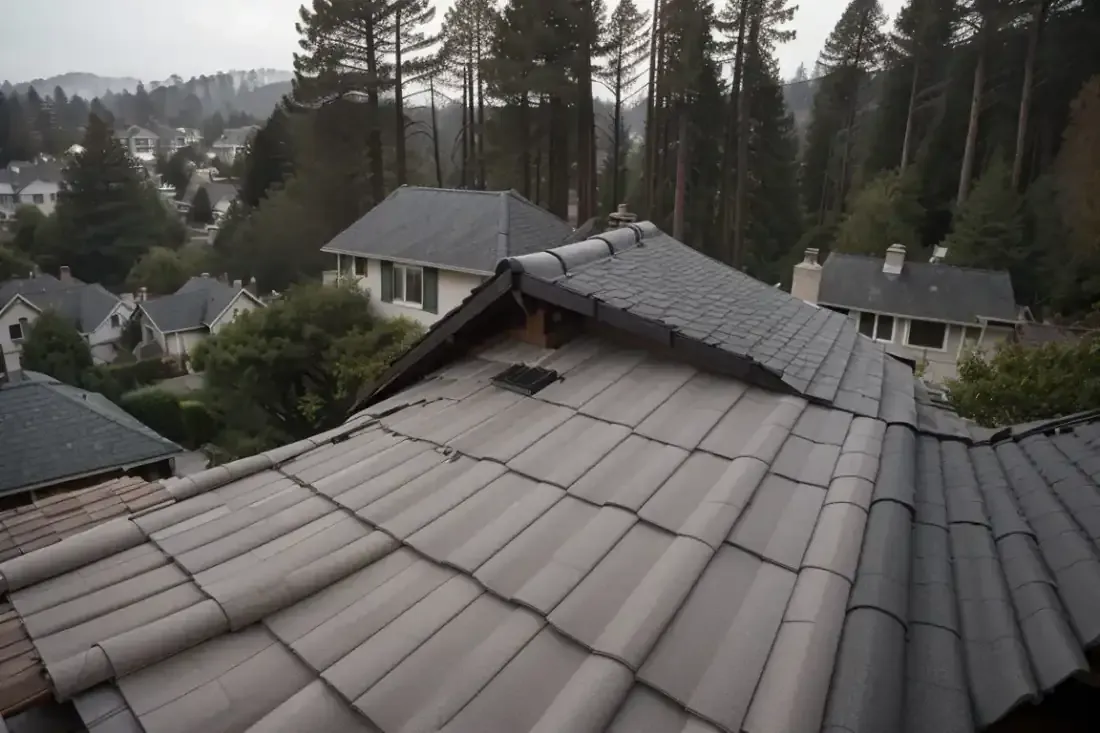
- Tile Roofing — Mill Valley Roof Repair: replacing cracked tiles alone may leave leaks unresolved when the underlayment beneath them has failed.
- Fascia Soffit Repair — Mill Valley Roof Repair inquiries about fascia and soffit repair should address the moisture source before damaged boards or panels are replaced.
- Roof Ventilation — Mill Valley Roof Repair: clear soffit intakes and unobstructed ridge vents help your attic release heat and moisture.
- Shingle Roofing — Mill Valley Roof Repair: your provider should replace damaged shingles and check the underlayment beneath them before closing a leak repair.
- Emergency Roof Repair — Mill Valley Roof Repair inquiries should identify active leaks and exposed decking so the provider can assess temporary tarping before permanent repai
- Skylight Installation — Mill Valley Roof Repair: skylight installation needs flashing integrated with your roof’s underlayment to direct rain around the opening.
- Roof Coating — Mill Valley Roof Repair: before choosing a reflective roof coating, ask the provider to check for trapped moisture and repair open seams.
Roof Repair Warning Signs: Leaks, Decay and Lifted Shingles
Roof repair should address the route water takes through the covering and underlayment.
A ceiling stain may sit below the entry point, so your provider should examine adjoining flashing and the accessible underside of the roof deck.
- Water can seep through split flashing and travel along rafters before a ceiling drip becomes visible.
- Moisture can wick through exposed plywood sheathing, leading to rot or decay around repeated leaks.
- A roof deck that begins to sag needs structural assessment before a surface patch covers the affected area.
- Granule loss accompanied by brittle, curling asphalt shingles can indicate end-of-life wear beyond an isolated repair.
- Wind uplift can loosen a starter course or ridge cap even when the surrounding field course appears intact.
- Materials that settle around a penetration can open a gap between a pipe boot and the vent pipe.
Roof Repair Materials Must Match the Existing Assembly
Roof repair requires compatible materials and water-shedding details.
Ask your provider to identify the existing covering, underlayment type and flashing condition before specifying replacements; a matching color alone does not establish that a repair will fit the assembly.
- Asphalt shingles need compatible dimensions and exposure so replacement pieces integrate with the existing staggered courses.
- Self-adhered underlayment, sometimes called ice and water shield, protects vulnerable details where the roof assembly requires it.
- Step flashing directs runoff at sidewalls, while counterflashing protects the upper edge of flashing at masonry transitions.
- A drip edge helps guide water away from exposed sheathing edges rather than letting runoff track behind the fascia.
- Ring-shank nails may be specified for sheathing attachment; shingle fasteners need the type and penetration required by their installation instructions.
- Sealant can peel and coatings can flake; neither should substitute for correcting a failed flashing lap.
Roof Repair Inspection and Repair Steps
Roof repair works best when the written scope follows the observed damage.
Your provider should explain the investigation, removal boundary and replacement detail before opening the assembly, with a written approval process for concealed deterioration.
- Document the symptoms with indoor photographs and the circumstances in which the leak appears.
- Inspect accessible attic surfaces for staining, damp insulation and moisture around penetrations without walking on unsupported ceiling surfaces.
- Trace the likely entry route through valleys, chimney flashing, vent flashing and adjoining roof planes.
- Remove damaged covering where necessary to expose the substrate and check deck condition.
- Replace deteriorated components and integrate underlayment laps with the existing drainage direction.
- Record the completed detail with photographs and explain which conditions would require a follow-up assessment.
Roof Repair Costs Depend on Access and Concealed Damage
Roof repair estimates should separate the visible repair from allowances for hidden damage.
A useful comparison shows measured scope, material specifications and exclusions; a price range without those details can hide substantial differences between proposals.
- Roof pitch and access affect the fall protection and working arrangements needed to reach the damaged section.
- Plywood sheathing replacement changes the scope when removal reveals soft decking beyond the visible stain.
- Flashing replacement can require lifting adjacent shingles or tiles rather than applying another bead of roof cement.
- Weather windows, material availability and required inspections affect scheduling, so request separate start and completion expectations.
- A line-item estimate should explain disposal, permit responsibility and how additional work receives your written approval.
Roof Repair Alternatives for Different Roof Systems
Roof repair suits localised defects when the surrounding assembly remains serviceable.
The related roofing services below address broader deterioration or different roof types; ask the provider which finding supports the recommended option rather than choosing by service name alone.
- Roof replacement becomes a comparison option when widespread cracking or recurring leaks make repeated patches difficult to justify.
- Shingle roofing addresses asphalt coverings whose replacement pieces must fit the existing fastening and exposure requirements.
- Tile roofing requires assessment of broken tiles and the underlayment beneath them, because the visible tile is only part of the assembly.
- Metal roofing requires attention to panel movement, seams and corrosion around incompatible metal connections.
- Commercial roofing requires a scope suited to the building's membrane, drainage outlets and rooftop penetrations.
- Roof coating may extend the serviceable life of a compatible substrate, but it cannot restore rotten decking or correct trapped moisture.
- Roof inspection helps establish condition before you commit to a patch, recover system or replacement.
- Roof leak detection is useful when interior water entry continues without an obvious defect above the stain.
Roof Repair Provider Checks Before You authorize Work
Roof repair proposals should identify the contractor responsible for the work and describe the repair boundary.
Verify documents with that provider, then compare the same quantities and exclusions across estimates before deciding which proposal addresses your roof's condition.
- Ask the provider for its license number and verify that the business identity matches the proposed contract.
- Request a certificate of insurance and confirm that it applies to the company performing the work.
- Obtain written warranty terms that identify covered defects, exclusions and the process for reporting a problem.
- Confirm who handles permits, weather protection during opening and approval of changes after tear-off.
Call (415) 753-4712 to discuss your roof repair inquiry. Describe the covering, visible damage and whether water is entering now. Ask the independent provider to confirm assessment arrangements and supply a written scope before you authorize work.