Fascia and Soffit Repair in Mill Valley, CA
Mill Valley Roof Repair inquiries about fascia and soffit repair should address the moisture source before damaged boards or panels are replaced.
Ask the provider to check gutter overflow, roof-edge flashing and blocked soffit vents; call (415) 753-4712 for roofing inquiries in Mill Valley.
Call (415) 753-4712Fascia and soffit repair addresses damaged eaves
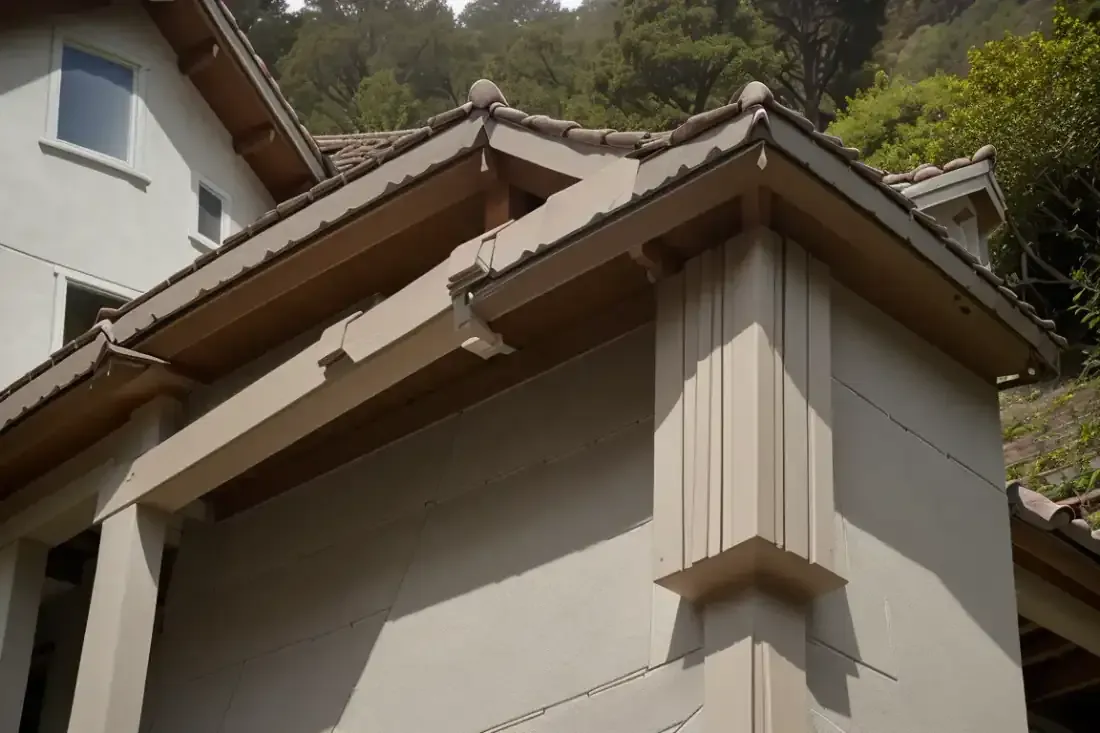
Fascia and soffit repair addresses the vertical boards behind gutters and the panels beneath your roof overhang.
A lasting repair requires sound attachment points and correction of water entry; covering decayed wood with new trim can conceal continuing damage.
- Fascia boards support gutter attachments where the assembly is designed for that load; softened wood can allow brackets to loosen.
- Soffit panels enclose the underside of the eave, while designated vents admit air into a ventilated attic.
- Rafter tails need inspection when decay extends beyond the visible trim into the framing behind it.
- Drip edge should direct roof runoff toward the gutter rather than behind the fascia.
- Roof-edge underlayment needs examination when staining suggests water is entering beneath the roof covering.
- Gutter removal and reinstatement should appear in the written scope whenever access requires detaching the gutter.
Fascia and soffit repair materials need assembly-specific choices
Fascia and soffit repair requires materials suited to exposure, support spacing and ventilation requirements.
Compare the proposed board dimensions and panel profile with the existing assembly, and ask how cut edges, joints and fasteners will be protected.
- Cedar fascia boards need a specified grade and dimensions; clear-grade material describes appearance rather than a promise against decay.
- Fiber cement soffit panels require suitable supports, compatible fasteners and cutting methods that follow the selected product instructions.
- Aluminum coil stock can form protective fascia trim, but cladding should not conceal unsound wood or trap existing moisture.
- Replacement wood needs protection at cut ends and joints, where water can wick into exposed fibers.
- Corrosion-resistant fasteners must suit the trim material and exposure; incompatible metals can accelerate corrosion.
- Vented soffit panels need documented open area so replacement does not unintentionally reduce attic intake ventilation.
Questions about your roof?
Call (415) 753-4712Fascia and soffit repair follows an inspection-led sequence
Fascia and soffit repair should proceed from identifying the moisture source to opening the damaged assembly and confirming sound backing.
Ask the provider to separate visible repairs from concealed-damage allowances before you authorize removal.
- The provider inspects gutter joints, roof-edge flashing and accessible attic areas, then records affected lengths and panel areas.
- A written scope identifies removal boundaries, replacement materials, access equipment and responsibility for any required permits.
- Damaged trim is removed carefully so the provider can examine rafter tails, backing and adjacent sheathing.
- Unsound attachment points are addressed before replacement boards and panels are secured, with ventilation paths kept open.
- The final check covers gutter reinstatement, exposed joints, finish protection and collection of removed trim and loose fasteners.
Fascia and soffit repair costs depend on concealed damage
Fascia and soffit repair costs depend on measured quantities, access and the condition behind the visible surface.
No verified local price range is supplied here; compare itemised estimates rather than treating a generic allowance as a property-specific quote.
- Linear footage of fascia and area of soffit should be measured separately because their materials and installation labor differ.
- Scaffolding, steep ground and restricted access can change setup requirements even when the damaged section is short.
- Hidden rafter-tail decay or sheathing damage requires a written change process before additional work proceeds.
- Painting, gutter handling and disposal should have clear inclusions so two estimates describe comparable work.
Ask for a proposed work sequence rather than assuming a fixed completion date.
Material availability, drying conditions, paint curing and concealed framing repairs can affect the schedule.
Your estimate should explain how weather interruptions and additional discoveries will be handled.
Questions about your roof?
Call (415) 753-4712Fascia and soffit repair must account for exposure
Fascia and soffit repair should address how rain, sunlight and debris affect your particular eaves.
In Mill Valley, ask the provider to assess shaded roof edges and nearby vegetation rather than recommending the same trim detail for every elevation.
- Leaves and pine needles can obstruct gutters, allowing water to overflow against fascia during heavy rain.
- Overhanging branches can deposit debris and rub against finishes; access for future gutter maintenance belongs in the discussion.
- UV exposure can make some panel materials brittle and cause protective paint to flake or peel.
- Salt exposure, where present, makes fastener compatibility and corrosion resistance important points to verify.
- Wildfire exposure requires checking applicable eave and vent requirements; material selection alone does not establish compliance.
Ventilation changes also need review of applicable energy and building requirements. Ask who will confirm permit responsibility and the required intake area.
A universal permit threshold based only on the size of a damaged patch should not replace that review.
Fascia and soffit repair estimates need written protections
Fascia and soffit repair comparisons should include documents as well as materials.
Before choosing a Mill Valley roofing contractor, request the provider's license details, certificate of insurance and written warranty terms, then compare them against the proposed scope.
- Written warranty terms should identify covered work, exclusions, claim procedures and any separate material coverage.
- Insurance claim assistance may help organise damage photographs and repair scopes, but your policy and insurer determine coverage.
- Progress photographs should show exposed backing and completed concealed details before replacement panels close the assembly.
- Repairing sound sections selectively can reduce discarded material, while damaged or wet components still need appropriate removal.
Ask the provider to distinguish sudden impact damage from gradual moisture deterioration in its documentation.
For roofing inquiries about loose fascia, open soffits or an active leak, call (415) 753-4712 and describe the visible damage without climbing onto the roof.
Questions about your roof?
Call (415) 753-4712Eave Repair Questions
When should you call a provider instead of repairing trim yourself?
Fascia and soffit repair needs professional assessment when you see soft wood, loose gutters, sagging panels or damage beyond safely accessible trim.
Roof-edge work can expose weakened framing. Photograph defects from the ground and ask the provider to identify the water source before replacement.
How long does the work take?
Fascia and soffit repair timing depends on access, affected length, material availability and concealed damage.
Ask for a written sequence covering removal, backing repairs, installation and finishing.
Rain interruptions and paint curing can affect completion even when the replacement area appears small.
Does the roof type change the repair approach?
Fascia and soffit repair must accommodate the existing roof-edge assembly. Asphalt shingles, tile and metal roofing have different edge details and handling requirements.
Ask whether the provider must lift the covering or disturb underlayment, and how those components will be reinstated.
Can new trim cover the damaged boards?
Fascia and soffit repair should not conceal rot beneath cladding. Covering damp or weakened boards can leave gutter attachments insecure and hide continuing decay.
Ask the provider to document sound backing and correct the moisture source before installing protective trim over existing wood.
Will insurance or a warranty pay for the repair?
Fascia and soffit repair coverage depends on the cause of damage and the applicable policy or written warranty.
Sudden impact and gradual deterioration may receive different treatment.
Keep photographs and inspection findings, and obtain a coverage decision rather than assuming the repair will be reimbursed.
Will replacing soffits affect attic ventilation?
Fascia and soffit repair can change attic intake airflow if replacement panels have fewer openings or insulation blocks the eaves.
Ask the provider to document vent area and check the airflow path toward existing exhaust vents before choosing solid or vented replacement panels.
Trace Water Above Eaves
Follow the numbers upward from the gutter to roof defects that can send water into the eaves.
- 1
- 2
- 3
- 4
- 5
- 6
- 1 Overflowing gutter edge
- 2 Open fascia flashing joint
- 3 Damaged eave drip edge
- 4 Torn roof-edge underlayment
- 5 Cracked shingles above eave
- 6 Open flashing farther upslope
Questions about your roof?
Call (415) 753-4712The Fascia and Soffit Repair Process
- Document the damage. Ask an independent local provider to inspect fascia softness, soffit supports, gutter overflow and roof-edge flashing, with photographs of accessible defects.
- Approve the scope. Compare measured quantities, material specifications, permit responsibility and concealed-damage allowances before authorizing work.
- Confirm the schedule. Request the expected sequence for access setup, removal, replacement and finishing, including how rain or drying conditions could change it.
- Expose and repair the backing. The provider removes affected trim, checks rafter tails and sheathing, and seeks approval for additional damage before closing the assembly.
- Install and check the assembly. Replacement trim should have suitable fasteners, protected cut edges, functioning drainage details and unobstructed ventilation openings.
- Review completion. Check progress photographs, gutter reinstatement, debris removal and written warranty terms with the contractor you choose.
Also Available
Questions about your roof?
Call (415) 753-4712Signs You Need Fascia and Soffit Repair
Fascia and soffit warning signs
- Peeling paint on fascia boards may expose wood to repeated wetting, especially beside an overflowing gutter.
- Soffit panels sagging or drooping can indicate weakened backing or moisture retained beneath the eaves.
- Visible holes or gaps in soffit allow pest access and expose concealed components to wind-driven rain.
- Water stains on exterior walls below the gutter suggest runoff is escaping its intended drainage path.
- Fascia nails backing out can reflect repeated movement or deteriorated wood that no longer holds fasteners securely.
- Cracking in sun-exposed soffit panels can indicate material degradation that needs assessment before panels detach.
- Bird or squirrel activity around an open eave may indicate nesting inside the soffit cavity.
- Leaves and pine needles spilling over gutter edges can signal a blockage that repeatedly wets nearby fascia.
If fascia is separating or soffit panels are hanging loose, keep clear of the area and call (415) 753-4712 for roofing inquiries in Mill Valley. Before authorizing repairs, ask the provider for its license details, certificate of insurance and written scope.
Written Estimates · Independent Local Providers · warranty
Call (415) 753-4712