Storm Damage Repair in Mill Valley, CA
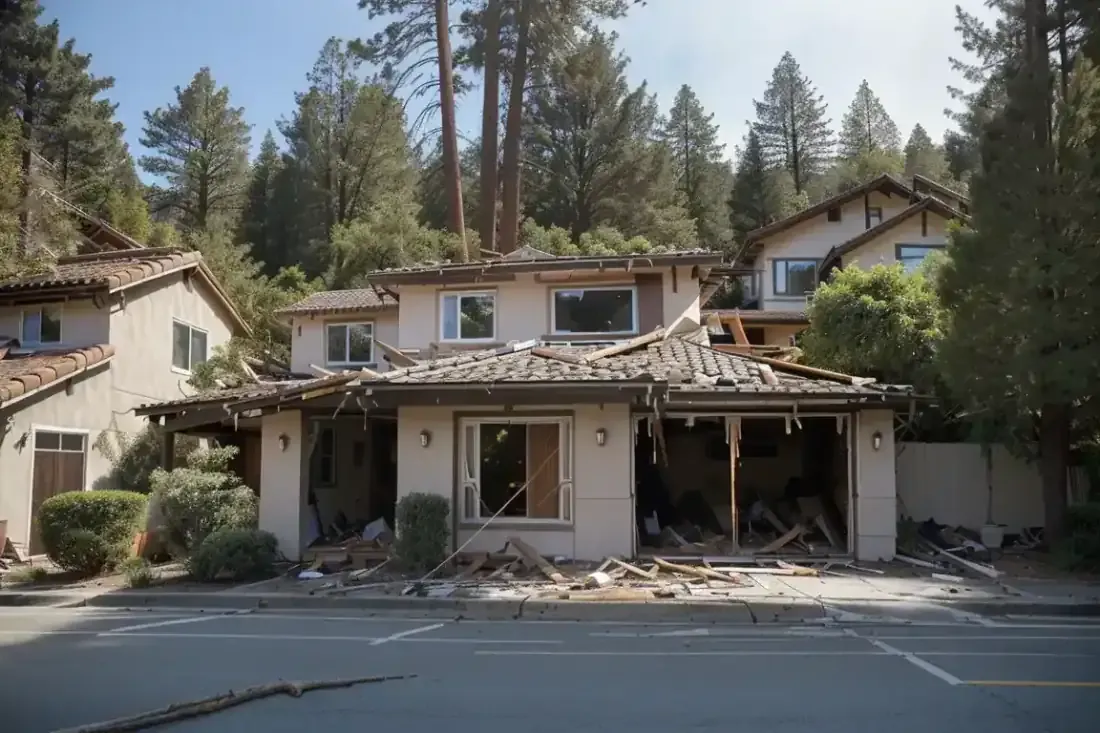
Ask your provider to secure storm-opened roof areas with temporary tarps before replacing damaged shingles or flashing.
For storm damage repair inquiries in Mill Valley, call (415) 753-4712 and describe any active leaks, fallen branches or exposed underlayment.
Call (415) 753-4712Storm damage repair starts with temporary protection
Storm damage repair should address active water entry before permanent repairs begin.
Ask an independent local provider whether temporary tarping is appropriate, how it will be secured and which damaged areas need further inspection once roof access is safe.
- Temporary tarps should shed water beyond the opening without directing runoff beneath adjacent roofing.
- Emergency roof repair should separate temporary protection from the permanent work described in your estimate.
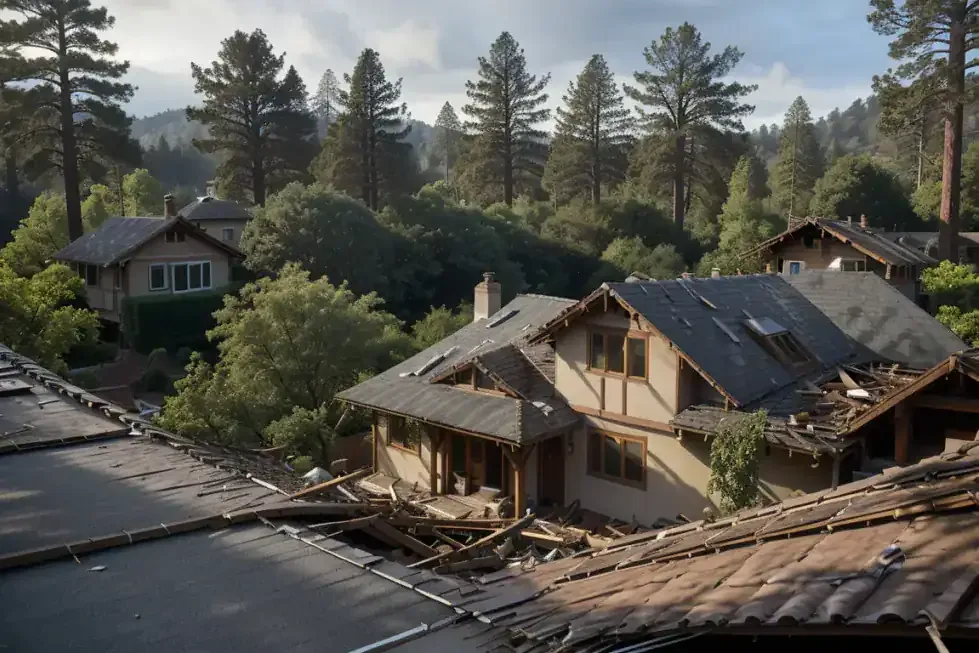
- Fallen branches can conceal punctures and structural damage; leave their removal from the roof to a provider with suitable equipment.
- Interior photographs should document water stains and damaged belongings without requiring you to enter an unsafe attic.
Storm damage repair identifies wind and impact failures
Storm damage repair requires distinguishing fresh impact damage from pre-existing deterioration.
A roof inspection should trace the entry point rather than assume the ceiling stain sits directly below it; water can travel along framing before becoming visible indoors.
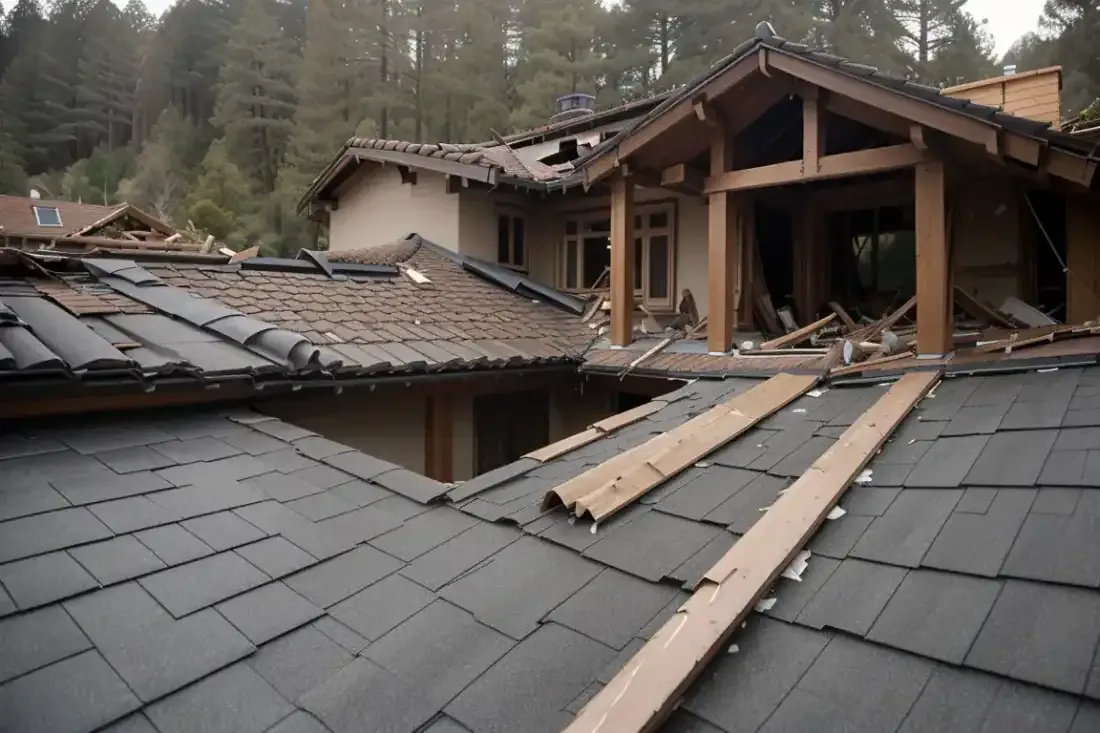
- Wind uplift can tear shingles at edges and ridges, breaking seal strips and exposing fasteners.
- Hail impact can fracture clay tiles and dislodge asphalt granules, although granule loss alone does not establish the cause.
- Lifted flashing allows rain to seep beneath roof coverings, while damaged underlayment leaves another route into the deck.
- Debris impact can puncture metal panels or split shakes, leaving small openings that admit wind-driven rain.
- Moisture can wick through plywood sheathing and cause rot or decay when concealed materials remain wet.
- A roof that begins to sag or framing that appears to settle needs structural assessment before routine patching continues.
Questions about your roof?
Call (415) 753-4712Storm damage repair matches materials to the existing assembly
Storm damage repair should restore the roof's drainage layers and fastening pattern, not just its visible surface.
Your written scope should identify replacement materials, their compatibility with existing components and any limitations caused by brittle or discontinued roofing.
- Replacement shingles should match the existing dimensions and exposure; color match alone does not establish compatibility.
- A starter course and field course need the specified fastening pattern, with staggered courses arranged according to installation instructions.
- Self-adhered ice-and-water shield may protect vulnerable transitions when its application suits the roof pitch and underlying substrate.
- Replacement decking should match the required panel specification; ring-shank nails require an appropriate length and fastening schedule.
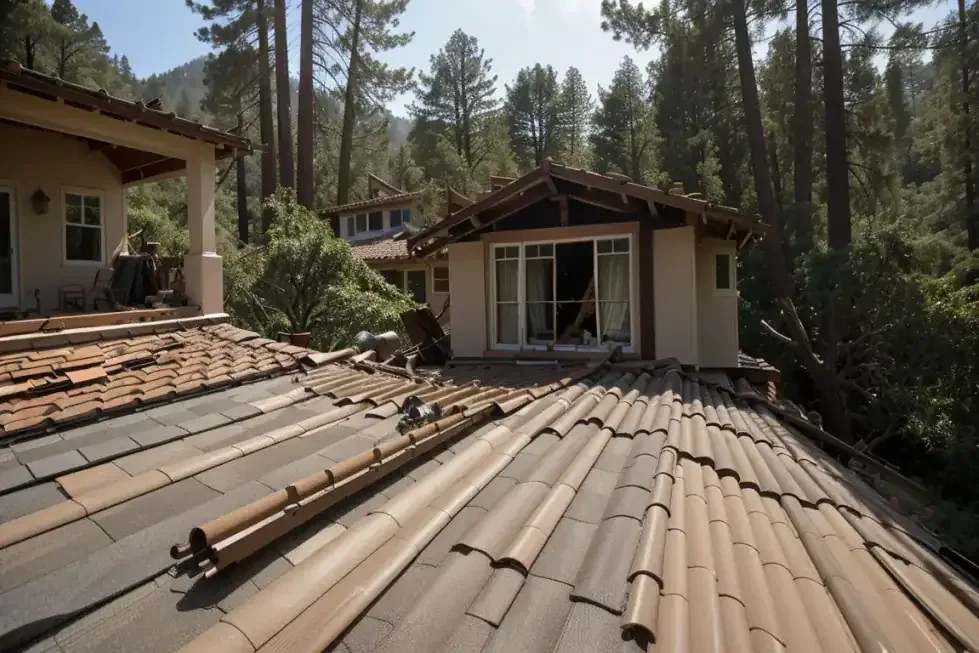
- Tile roofing needs inspection beneath broken pieces because cracks, displaced tiles and damaged underlayment can require different repairs.
- Standing-seam metal panels need compatible replacement profiles and connections; a dent does not automatically establish a leak.
- Impact-resistant asphalt shingles and fire-rated roof assemblies have different performance classifications; ask for documentation relevant to the proposed system.
Storm damage repair follows a documented sequence
Storm damage repair works best when inspection findings become an itemised scope before permanent work starts.
Ask your provider to distinguish confirmed damage from allowances for concealed deterioration and explain what discovery would require a written change to the estimate.
- Record the storm date, visible openings and leak locations, using ground-level photographs where possible.
- Inspect shingles, ridge caps and flashing, then assess accessible attic surfaces for moisture and damage.
- Specify the tear-off limits and explain why an overlay or recover would or would not address the damaged layers.
- Confirm permit responsibility with the provider and local building authority rather than relying on a general percentage threshold.
- Replace damaged components and integrate step flashing, counterflashing and underlayment so upper layers drain over lower layers.
- Review completion photographs and cleanup arrangements, including roofing nails, debris disposal and checks of gutter outlets.
Questions about your roof?
Call (415) 753-4712Storm damage repair costs depend on exposed conditions
Storm damage repair costs depend on damaged area, roof access and the condition beneath the covering. No verified local price bands are supplied here.
Compare written estimates with matching quantities and exclusions instead of treating an unsupported range as a project budget.
- Roof pitch and access affect staging, fall protection and the labor needed to reach the damaged section.
- Deck condition changes the scope when removal exposes soft sheathing or deteriorated fastener attachment points.
- Flashing replacement can require removing surrounding roofing to restore correct laps at walls or chimneys.
- Material availability affects scheduling when replacement tiles or metal panel profiles need matching.
- Weather windows affect when exposed decking can be repaired and covered; request separate dates for temporary and permanent work.
Storm damage repair documentation supports informed decisions
Storm damage repair documentation should make the contractor's proposed work understandable to you and, where relevant, your insurer.
Insurance claim assistance can support recordkeeping, but the insurer determines coverage under your policy; an estimate does not establish claim approval.
- Damage photographs should distinguish storm-related openings from granule loss, corrosion or end-of-life wear that may predate the event.
- A line-item estimate should separate temporary protection from replacement materials, labor and disposal.
- Adjuster coordination should clarify which photographs and measurements are needed before damaged materials are discarded.
- Written warranty terms should identify covered work, exclusions, claim procedures and the party responsible for responding.
Questions about your roof?
Call (415) 753-4712Storm damage repair planning accounts for exposure
Storm damage repair should consider the conditions that let water enter and the maintenance needed afterward. During heavy rain or high wind, stay off the roof.
Ask your provider which drainage restrictions or attachment failures contributed to the damage.
- Leaves and pine needles can obstruct valleys and gutters, allowing runoff to back up around vulnerable roof edges.
- Overhanging branches can strike roofing or drop debris that blocks downspouts; request an assessment of safe clearance.
- Salt exposure can accelerate metal corrosion where present, so replacement flashing needs compatible metals and suitable protective finishes.
- Ultraviolet exposure can make asphalt materials brittle, while coatings may peel or flake as their adhesion deteriorates.
- Clay or concrete surfaces may spall or erode; the provider should distinguish surface deterioration from impact fractures.
- Repairing sound surrounding roofing can reduce discarded material, but concealed moisture should not be retained merely to avoid replacement.
Before authorizing work, ask the contractor you choose for its license number and certificate of insurance. Compare written scopes and permit responsibilities.
For storm-related roofing inquiries, call (415) 753-4712 and describe the damage you can observe safely.
Storm Repair Questions
When should I call a roofer instead of repairing storm damage myself?
Storm damage repair requires a provider when shingles are missing, flashing has lifted or water is entering your home.
Stay off wet roofing and keep clear of sagging ceilings. You can photograph visible damage from the ground and move belongings away from leaks if safe.
How long will permanent repairs take?
Storm damage repair timing depends on safe access, dry weather and material availability. Temporary protection and permanent repairs may require separate visits.
Ask the provider for a written schedule that explains inspection, material ordering and any concealed decking damage that could change the planned completion date.
Does my roof type change the repair approach?
Storm damage repair differs across shingles, tiles and metal panels. Shingles need compatible exposure and fastening; tile damage may extend into the underlayment.
Metal repairs require attention to panel connections and compatible metals. Ask the provider which layers need replacement and how adjacent roofing will be protected.
Will insurance pay for the damage?
Storm damage repair may qualify for coverage depending on your policy, the cause and the insurer's assessment. Keep dated photographs and temporary-protection receipts.
Ask your insurer about documentation and claim deadlines before discarding damaged materials; the contractor's estimate alone does not establish coverage.
Can a small damaged area be repaired without replacing the roof?
Storm damage repair can address a limited area when surrounding materials remain serviceable and compatible replacements are available.
Widespread cracking, brittle shingles or deteriorated decking can expand the scope.
Ask the provider to document why a localised repair or replacement is appropriate for your roof.
What should I verify before approving the estimate?
Storm damage repair estimates should identify removal limits, replacement materials and flashing details.
Ask for the provider's license number and certificate of insurance, plus written warranty terms.
Confirm permit responsibility and how concealed damage will be priced before approving additional work.
Questions about your roof?
Call (415) 753-4712Storm Water Entry Points
Follow the numbers from the eave upward to locate potential storm-related water entry points.
- 1
- 2
- 3
- 4
- 5
- 6
- 1 Overflowing eave gutter
- 2 Lifted drip edge
- 3 Missing lower-course shingles
- 4 Punctured valley lining
- 5 Lifted upper-wall flashing
- 6 Dislodged ridge cap
Typical cost bands
| Scope | Typical low | Typical high | What moves it |
|---|---|---|---|
| Wind or hail damage repair | $1,560 | $3,480 | Scope of damage and whether an insurer is involved |
| Hail damage repair | $700 | $4,000 | Number of impact points and shingle condition |
| Emergency tarp before repair | $150 | $450 | Area covered and access |
Questions about your roof?
Call (415) 753-4712The Storm Damage Repair Process
- Document the problem safely. Photograph visible damage from the ground and note when leaking began. For roofing inquiries through Mill Valley Roof Repair, call (415) 753-4712; avoid climbing onto wet or damaged roofing.
- Arrange inspection and temporary protection. Ask an independent local provider to assess openings, flashing and accessible attic surfaces. Confirm whether temporary tarps are needed and how that work will be documented.
- Review the written scope. Compare material specifications, removal limits and decking allowances. Ask for the provider's license number, certificate of insurance, permit responsibility and written warranty terms before authorizing work.
- Confirm the repair sequence. Request a schedule that separates temporary protection from permanent repairs and explains weather dependencies. The provider should replace damaged layers and restore drainage laps rather than cover concealed damage.
- Check completion and cleanup. Review photographs of concealed repairs, confirm debris and roofing nail collection, and retain invoices with warranty documents. Ask how to report further leaking and which follow-up checks are included.
Also Available
Questions about your roof?
Call (415) 753-4712Signs You Need Storm Damage Repair
Warning signs after a storm
- Missing or curled shingles can expose underlayment after high wind, particularly along roof edges and ridges.
- Granule loss in gutters or downspouts warrants assessment when it appears alongside fresh shingle damage.
- Cracked roof tiles or dented metal panels can indicate debris impact; ask whether the damage affects drainage or watertightness.
- Water stains on ceilings or attic walls can indicate a concealed leak even after rainfall stops.
- Lifted chimney flashing or open wall connections can admit wind-driven rain beneath otherwise intact roofing.
- Leaves and pine needles blocking gutters can cause overflow during heavy rain and wet the fascia below.
- A fallen branch or visible puncture needs assessment before anyone walks across the affected roof section.
- A new roofline sag or bulging wet ceiling requires you to keep clear of the affected area and seek urgent assessment.
If your roof is leaking after a storm, call (415) 753-4712 for roofing inquiries in Mill Valley. Before authorizing repairs, ask the independent provider for its license number, certificate of insurance and a written scope that separates temporary protection from permanent work.
Written Estimates · Independent Local Providers · warranty
Call (415) 753-4712