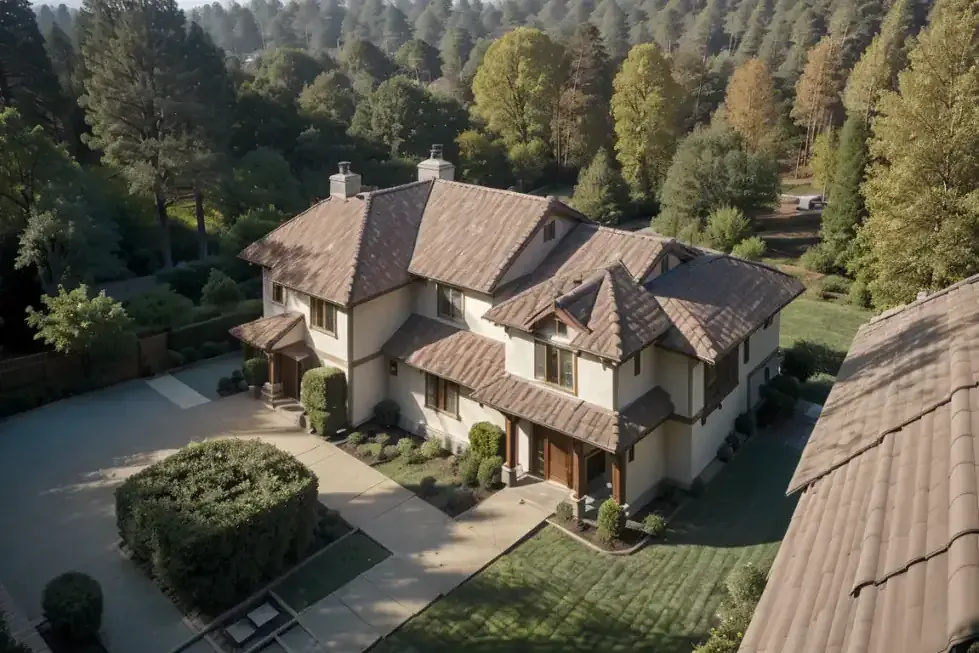
Roofing in Concord, CA
Concord's roofing story is written in its midcentury subdivisions.
Call (415) 753-4712Serving Concord and
Downtown Concord adds older commercial and residential stock, while the Galindo Home stands as a 19th century landmark rather than a sign that Victorians dominate local housing.
That low-slope inheritance makes membrane selection the deciding call on many Concord roofs.
Legacy tar and gravel assemblies, single-ply replacements, modified bitumen and foam systems all show up across the ZIP codes 94518 through 94521.
Steep-slope homes lean on asphalt composition shingles and tile. On flat sections, drainage is the whole ballgame.
Summer heat and cooling exposure work on roofs year after year.
Concord's climate action plan addresses heat waves and building energy performance directly, and roof solar reflectance is regulated for climate zone 12 reroofs.
That matters at permit time, not just at the design stage. Typical failure modes here look like this:
- Ponding water and blocked drains on low-slope midcentury roofs. - Seam and flashing failures on aging single-ply membrane. - Blistering and gravel loss on legacy built-up roof surfaces. - Sun-cracked, curled shingle on older steep-slope sections. - Dry, failed sealant at penetrations and roof-to-wall junctions. Permits come from the City of Concord Building Division. Bulletin IB-022 requires a permit for new roofs and for replacement or reroofs. Climate zone 12 rules apply to single-family reroofs replacing more than 50 percent of the roof. Contra Costa County Fire Protection District WUI amendments for 2025 cover mapped High and Very High fire hazard zones. Parcel-level applicability needs confirming before any material is ordered. A roofer who skips that check is guessing.
What Roofing Work in Concord Includes
Every job starts with a roof inspection, not a sales pitch.
The roofer walks the roof, checks the attic from below, and documents what the deck actually looks like.
Expect photos of the failure points and a written roof estimate separating repair from replacement.
Scope then turns on the existing assembly.
On a low-slope Concord roof, that means deciding whether the old layers come off or a recover is legal and sensible.
On steep-slope sections, tear-off down to sheathing is the honest default.
A typical replacement sequence runs like this:
- Tear-off of existing roofing, with debris staged in a dumpster.
- Deck inspection for rot, soft spots and failed fasteners in plywood or OSB sheathing.
- Installation of underlayment, often synthetic underlayment, plus ice-and-water shield at vulnerable edges.
- Flashing work at valleys, chimneys and penetrations.
- Finish material, then cleanup and magnetic sweep.
Flashing is where most leaks are born.
Step flashing, counter-flashing, chimney flashing, pipe flashing and pipe boots all need to be replaced, not reused, on a full tear-off.
Drip edge at the eave and rake protects the fascia and sheathing edge. Ridge cap and ridge vent close the top of the roof correctly.
Ventilation gets checked alongside the roof itself. Soffit vent intake and ridge vent exhaust must balance, or attic heat and moisture build up.
On flat sections, a scupper or interior drain may carry the water instead of a gutter and downspout.
Scaffold and ladder staging, nail gun and air compressor work, pry bar and roofing shovel demolition — all of it is normal trade vocabulary.
So is the roofing square as the unit of measurement.
What a homeowner should verify is the permit, the scope in writing, and who handles inspection sign-off.
Questions about your roof?
Call (415) 753-4712Quality & Materials Standards
Material choice in Concord starts with geometry.
Low-slope areas need a membrane rated for ponding and heat: TPO, EPDM or PVC membrane, modified bitumen, or a built-up roof where that system fits.
Steep-slope areas can take asphalt shingle, architectural shingle or three-tab shingle, or tile such as clay tile and concrete tile.
Metal panel options include standing-seam panel and corrugated panel.
Weigh these against the roof and the code:
- Reflectance and emittance values that satisfy climate zone 12 reroof rules.
- WUI-rated assemblies where the parcel sits in a mapped fire hazard zone.
- Fastener and attachment schedules suited to the substrate and wind exposure.
- Ventilation balanced between intake and exhaust.
Underlayment quality separates a ten-year roof from a thirty-year one. Synthetic underlayment outperforms traditional roofing felt and tar paper in heat.
Ice-and-water shield belongs at valleys, eaves and anywhere water can back up. Sealant, caulk, mastic and roof cement are maintenance items, not permanent waterproofing.
Deck condition decides everything above it. Rotten sheathing, a sagging rafter or a compromised truss means structural repair before any new roof goes down.
A roofer should show you the deck, not just the finished surface.
Insurance claims deserve plain language. Storm damage may be covered; wear and tear generally is not.
Document with photos, keep the roofer's inspection report, and let the adjuster see the same evidence. No one can promise a claim outcome.
Building code compliance is the baseline, not a selling point. Ask for the permit number and the final inspection record.
Verify the roofing contractor's license and insurance directly with the state. Get the roof estimate in writing, with materials, flashing scope and ventilation spelled out.
That is how a Concord homeowner protects the investment.
Seasonal and Storm Exposure in Concord
Concord's summer heat is the first thing a rooftop feels.
Weeks of triple-digit afternoons push attic temperatures high, and that heat cycles through every layer above the ceiling. Asphalt shingle granules loosen faster under that load.
Membrane seams on low-slope roofs soften and pull. Insulation and ventilation decide whether the heat stays in the attic or cooks the roof deck from below.
The rainy season arrives fast, usually between November and March. Storms here are short and intense rather than long and gentle.
Water finds every weak point: a lifted shingle tab, a failed pipe boot, a clogged gutter. On flat and low-slope geometry, drainage is the deciding factor.
One blocked downspout can pond water against a seam for days.
Between the two seasons sits the dry stretch that hides problems. Sun bakes sealant and caulk until it cracks. Wind lifts ridge cap and rake edges.
Small flashing gaps stay invisible until the first real storm tests them.
Inspection timing follows from that pattern:
- Late spring, after heat has stressed sealants and before fire season
- Early fall, clearing gutters and downspouts ahead of rain
- Immediately after any storm that pushes water past an eave
- Before any reroof, to confirm what the deck and underlayment actually look like
Heat also ties into city policy. Concord's climate action plan addresses heat waves and building energy performance.
Climate zone 12 reroof rules require steep-slope products with aged solar reflectance of at least 0.20 and thermal emittance of at least 0.75, or SRI of at least 16.
Low-slope products must hit 0.63 and 0.75, or SRI of at least 75, with exceptions and insulation alternatives.
A roof inspection that ignores reflectance is only half the job.
Ask any roofing contractor how the planned product meets the rule before signing a roof estimate.
Questions about your roof?
Call (415) 753-4712Local Service Areas
Concord's housing stock splits into distinct eras, and each one fails in its own way.
The midcentury subdivisions built between 1963 and 1965 are the heart of the story.
Their flat and low-slope geometry makes membrane selection and drainage the deciding factors on nearly every reroof.
Rancho del Diablo
This Eichler subdivision carries the original low-slope roof geometry, so the flat sections and shallow pitches set the rules.
Moisture management matters more here than shingle color or curb appeal.
- Original flat and low-slope sections often sit under legacy tar and gravel, with ponding at low spots
- Replacement membrane choices run to single ply, modified bitumen or foam, and the wrong pick shows as blisters or seam lifts
- Shallow roof-to-wall junctions collect debris that blocks drainage and backs water under the eave
- Long unbroken rooflines leave few places for water to escape, so downspout placement needs review
Rancho de los Santos
Another Eichler tract from the same build window, this one rewards a close look at how each flat section drains.
Small grade changes between lots mean two neighboring roofs can behave very differently.
- Low-slope panels joined by visible seams are common, and seam failure shows as dark streaks or soft spots
- Membrane seams and flashings at penetrations are the first weak points as sealant ages
- Roof decks under older built-up roof layers may hide saturated insulation that only a tear-off reveals
- Ventilation is limited by design, so attic heat builds and stresses coatings and adhesives
Parkwood Estates
The third midcentury subdivision rounds out the Eichler stock, with the same flat geometry and the same drainage-first logic.
Age means most roofs here have been recovered at least once, so layer count matters.
- Stacked roofing layers from past reroofs add weight and hide deck condition until removal
- Modified bitumen and single-ply membrane systems are typical replacement paths, with seam quality deciding lifespan
- Flashing at parapets and low walls traps water when the counter-flashing seal breaks
- Shade trees drop debris onto flat sections, and clogged scuppers or drains turn ponding into leaks
Downtown Concord
The downtown core mixes older commercial and residential buildings with the 19th century Galindo Home as its landmark.
That Victorian is a single landmark, not evidence that Victorian houses dominate the city.
- Steep-slope roofs on older downtown buildings often carry wood shake or cedar shake that dries, splits and curls
- Clay tile and concrete tile on period buildings crack and slip, and broken pieces open paths for water
- Chimney flashing and step flashing at wall intersections are common leak sources on older masonry
- Dormers and gable ends add valleys and rake edges where wind-driven rain finds gaps
- Corrugated panel and standing-seam panel roofs on outbuildings need fastener checks as sealant washers age
Citywide Permit and Fire-Zone Notes
Permits come from the City of Concord Building Division. Bulletin IB-022 requires a permit for new roofs and for replacement or reroofs.
Confirm the minor repair exemption for your scope before work starts.
- Climate zone 12 reflectance rules apply to single-family reroofs replacing more than 50 percent of the roof
- The city lists 2025 Contra Costa County Fire Protection District WUI amendments for mapped High and Very High hazard zones
- Parcel-level applicability needs confirmation, so check your address before choosing materials
- A Class A assembly and proper eave and vent detailing matter more in mapped zones
Get Your Concord Roof Checked
Concord roofs live through heat, short intense storms and a dry season that hides damage.
The right time to find a problem is before the first rain tests it.
Whether your home sits on a flat Eichler roofline or an older downtown steep-slope roof, a careful roof inspection tells you what the deck, underlayment and flashing actually need.
Call (415) 753-4712 or use the contact form to start a conversation about your roof.
Questions about your roof?
Call (415) 753-4712Services in Concord
Roof Repair
Professional roof repair services in Concord.
Roof Inspection
Professional roof inspection services in Concord.
Roof Replacement
Professional roof replacement services in Concord.
Gutter Installation
Professional gutter installation services in Concord.
Metal Roofing
Professional metal roofing services in Concord.
Roof Leak Detection
Professional roof leak detection services in Concord.
Storm Damage Repair
Professional storm damage repair services in Concord.
Commercial Roofing
Professional commercial roofing services in Concord.
Insurance Claim Assistance
Professional insurance claim assistance services in Concord.
Tile Roofing
Professional tile roofing services in Concord.
Fascia Soffit Repair
Professional fascia soffit repair services in Concord.
Roof Ventilation
Professional roof ventilation services in Concord.
Shingle Roofing
Professional shingle roofing services in Concord.
Emergency Roof Repair
Professional emergency roof repair services in Concord.
Skylight Installation
Professional skylight installation services in Concord.
Roof Coating
Professional roof coating services in Concord.
Compare Written Estimates in Concord
Independent Local Providers and provider-held · serving California
Call (415) 753-4712