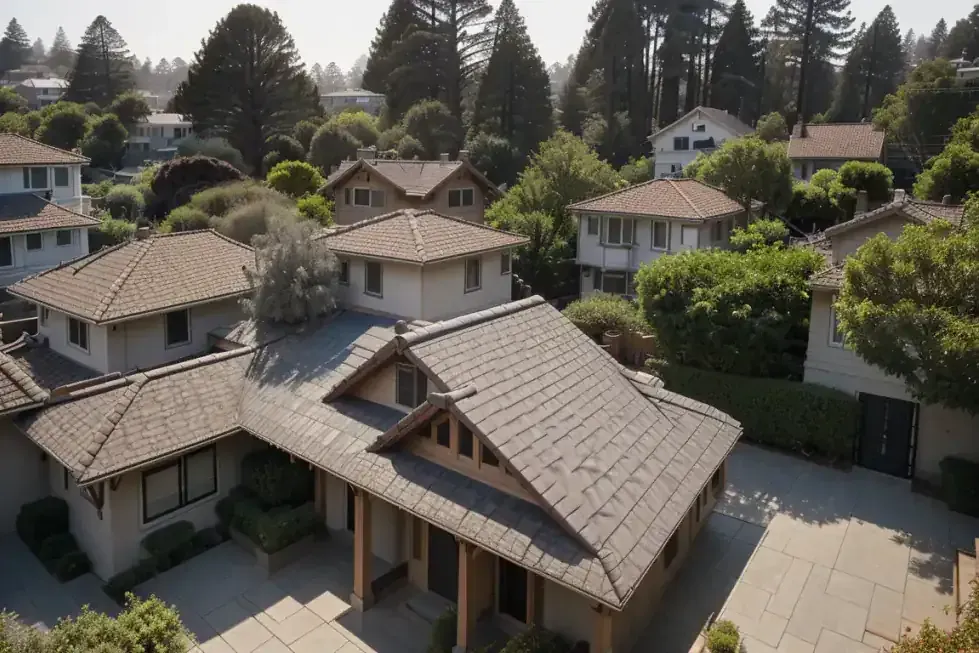
Roofing in San Francisco, CA
San Francisco's housing stock is old and specific. Victorians from the late 1800s line the Mission District and Pacific Heights.
Call (415) 753-4712Serving San Francisco and
Edwardians fill the Sunset District and Castro. Mid-century apartment buildings stack up in SoMa and Nob Hill. That age sets the whole problem.
A roofer here is often working on a building 80 to 130 years old. Original wood decking, layered roofs, and ornate trim are common.
Many roofs were re-covered two or three times before anyone looked underneath. Climate exposure is unusual.
There is fog and marine layer moisture much of the year. Snow is essentially absent. Strong Pacific storms bring wind and horizontal rain.
That combination causes slow, quiet failure more than sudden collapse. - Fog-driven moisture condenses on cold decking and works into seams.
- Wind-driven rain pushes under flashings and behind fascia at the eave.
- Long wet seasons feed moss, algae, and rot in wood shake and cedar shake.
- Little sun means shingles stay damp and adhesive strips fail to seal. Typical failure modes follow from this.
Asphalt shingle edges curl and lift at the rake. Three-tab shingle and architectural shingle alike shed granules into gutters.
Ridge cap and hip details loosen first on windy corners. Flat and low-slope sections are common on Victorian additions and mid-century apartment buildings.
Built-up roof and modified bitumen surfaces crack and pond. Membrane roofs at parapet walls pull away from counter-flashing. Seismic history matters too.
The 1906 and 1989 earthquakes damaged roofs across the city. Chimney flashing and parapet coping often remain patched from that era.
Those repairs are where leaks start today. Roofline complexity is another local reality. Dormers, skylights, and tight overhangs crowd narrow lots.
Access is tight, so scaffold and careful staging are part of every job.
A roofer who has not worked a San Francisco roofline usually underestimates the detail count.
What Roofing Work in San Francisco Includes
Work begins with a roof inspection, not a sales visit. A good inspection documents the roof deck, sheathing, and substrate from both sides where possible.
It checks attic side for staining, rot, and ventilation.
- Deck condition: plywood, OSB, or original board sheathing, plus rafter and joist ends.
- Flashing: step flashing, apron flashing, chimney flashing, pipe flashing, and boot flashing.
- Water management: valley, gutter, downspout, scupper, and drip edge condition.
- Ventilation: ridge vent, soffit vent, attic fan, and blocked soffit openings.
Materials selection follows the slope and the building. Steep gable and hip roofs often take architectural shingle or cedar shake.
Low-slope and flat areas need membrane or built-up roof systems.
Tile, clay tile, concrete tile, and slate appear on older and larger homes and need structural review.
Tear-off and prep set the quality floor. Old roofing felt, tar paper, and failed underlayment come off with a roofing shovel and pry bar.
Debris goes into a dumpster, not a neighbor's yard. Nails and fasteners get swept with a magnet.
Then the layers go back in order:
- Synthetic underlayment or roofing felt over sound decking.
- Ice-and-water shield at valleys, eaves, and low-slope transitions.
- Flashing, sealant, and mastic detailed before the finish layer.
- Ridge cap, vent boot, and pipe boot fitted last.
Installation uses a nail gun and air compressor on production roofs. Hand-nailing is standard on slate and tile.
Torch work and adhesive belong to modified bitumen and membrane details. Every nail, screw, and fastener placement follows the manufacturer's pattern.
Cleanup includes gutter clearing, downspout checks, and debris removal. A final roof estimate should list what happens to old materials, skylights, and any rooftop equipment.
Ask how dormers, canopy, and awning junctions are handled before signing.
Questions about your roof?
Call (415) 753-4712Quality & Materials Standards
San Francisco roofs fall under California building code, which sets minimums, not best practice. Verify the roofing contractor pulls permits for tear-off and structural work.
Ask who inspects the roof deck once it is open.
Material choice should match slope, exposure, and building age. Standing-seam panel and metal panel suit low-slope and modern additions.
Corrugated panel is common on sheds and small structures. TPO, EPDM, and PVC membrane handle flat rooftops.
Built-up roof and modified bitumen remain standard on older apartment buildings.
Underlayment is where cheap jobs cut corners. Synthetic underlayment outlasts roofing felt and tar paper on wet coasts.
Ask for the product name and the manufacturer's warranty terms in writing.
Detail work drives long-term performance:
- Counter-flashing and step flashing at walls and chimneys.
- Pipe boot and vent boot replacement, not caulk over failed rubber.
- Drip edge at every eave and rake, with correct overhang.
- Sealant and mastic rated for coastal moisture and UV.
Honest claims matter. Most manufacturer warranties require certified installation and documented ventilation. Insurance claims follow storm damage, not age or wear.
Photograph conditions before work starts and keep the roof estimate itemized.
Watch for failures that return:
- Ponding water at parapet and scupper areas.
- Lifted ridge cap after wind events.
- Rot hidden under old shingle layers.
- Blocked soffit vent causing attic condensation.
A written scope, a permit record, and a clear warranty explanation are the standards worth checking.
Roofing is a trade of details, and San Francisco rewards patience with them.
Seasonal and Storm Exposure in San Francisco
San Francisco does not get a roofing "season" so much as a wet five months and a foggy seven.
The Pacific marine layer pushes moisture against the city most of the year. That fog condenses on a rooftop overnight and sits there until midday.
Mild temperatures cut both ways. Little snow means no freeze-thaw cycle tearing at concrete tile.
It also means rot never fully dries out between storms, so a small leak keeps feeding.
Victorian-era wood shake and cedar shake take the worst of it. Fog-soaked shakes swell, then split when the sun finally hits them.
Original boards under those old roofs often hold moisture for months.
Here is what repeated marine exposure does to common materials:
- Asphalt shingle and architectural shingle granules erode faster when algae and moss stay damp.
- Wood shake and cedar shake grow lichen on north slopes and soften along the butt edges.
- Standing-seam panel and metal panel shed fog well, but fasteners and lap sealant still age.
- Built-up roof plies crack where the sun hits after a foggy spell.
- Membrane and TPO on flat commercial-style roofs collect ponding near scuppers.
Occasional strong Pacific storms arrive with wind and driving rain. That combination finds every failed flashing. Ridge cap, step flashing and chimney flashing come apart first.
Wind also lifts loose shingle tabs and pushes water sideways under a drip edge. Gutter and downspout overflow then backs water into the fascia and soffit.
Ice dam formation is rare; the city's real enemy is wind-driven rain and chronic damp.
The inspection calendar follows from this pattern. Schedule a roof inspection in early fall, before the storms, when damage is visible and dry.
Walk the roofline again after the first heavy rain. Spring is the time to check for winter damage and rot.
Any roof older than its material's expected life deserves a look every year.
A roof estimate in late summer gives a homeowner time to plan before the rains.
Homeowners near Twin Peaks and Mount Davidson should also think about seismic repair.
The 1989 Loma Prieta quake and 1906 both cracked roof decking and sheathing across the city.
Questions about your roof?
Call (415) 753-4712Local Service Areas
Mission District
The Mission mixes Victorian row houses with Edwardian single-family homes, many over a century old.
Sun exposure is strong here, so heat and fog alternate and stress the roof.
- Original wood shake on 1890s Victorians that has dried, split and curled along the rake
- Three-tab shingle patched over older tar and pitch layers that hides rot in the decking
- Flat rooftops on Edwardian additions where modified bitumen seams open at the parapet
- Terra cotta clay tile on sun-exposed slopes that cracks and lets water past the underlayment
- Original roof deck plywood that sags between rafters after years of slow leaks
Pacific Heights
Large Victorian and Edwardian homes here often carry complex rooflines with dormers and hips.
Mansard and gambrel forms are common on the grander blocks, and each one hides valleys.
- Slate and clay tile on early mansions where broken pieces expose the roofing felt beneath
- Dormer valleys that collect debris and send water under step flashing
- Chimney flashing and counter-flashing around brick stacks that pull apart at the counter-flashing
- Copper drip edge and gutter runs that corrode at the joints and stain the fascia
- Mansard slopes where sagging battens and old tar paper trap moisture against the sheathing
Sunset District
The Sunset is dominated by mid-century single-family homes with low-pitch roofs and few dormers.
Salt air off the ocean eats metal faster than anywhere else in the city.
- Low-slope asphalt shingle and built-up roof surfaces where ponding sits after fog and rain
- Corroded metal panel and vent boot flashings that rust through near the ocean
- Pipe flashing and pipe boots on furnace vents that crack and leak into the attic
- Daylight under the eave where a failed drip edge lets wind-driven rain wick up the sheathing
- Fog-damp roof deck and OSB that softens beneath a worn substrate
Nob Hill
Nob Hill's dense blocks of older apartment buildings and Victorian hotels mean steep pitches and shared parapets. High winds funnel between the towers here.
- Parapet and coping walls on 1920s apartment blocks where coping joints open to the weather
- Flat rooftop membrane and PVC membrane fields that blister and pond near the scupper
- Ridge cap and hip shingles on steep Victorian slopes that lift in Pacific wind
- Firewall and party-wall counter-flashing that gaps and lets water into the structure
- Old tar and built-up roof layers under newer coating that trap moisture and hide soft decking
Castro
The Castro's Victorians and Edwardians sit on hillsides with steep gables and prominent front dormers. Many have been re-roofed piecemeal over the decades, so layers mismatch.
- Mixed shingle layers from partial re-roofs where old three-tab sits under newer architectural shingle
- Gable verge and rake trim that rots where water runs off a worn drip edge
- Skylight and dormer flashing on rear additions that leak around the curb
- Wood shake and cedar shake on front-facing slopes that grows moss and holds moisture
- Rotted fascia and soffit boards behind a failed gutter that drop debris onto the roof
Get an Independent Roof Check Before the Rains
San Francisco roofs reward timing. A fall roof inspection before the Pacific storms catches the flashing and shingle problems while they are cheap to fix.
Ask any roofing contractor for a written roof estimate that names the materials, the roof deck condition and the building code items.
Verify licensing and insurance before anyone climbs a ladder. Call (415) 753-4712 or use the contact form to start a conversation about your roof.
Questions about your roof?
Call (415) 753-4712Services in San Francisco
Roof Repair
Professional roof repair services in San Francisco.
Roof Inspection
Professional roof inspection services in San Francisco.
Roof Replacement
Professional roof replacement services in San Francisco.
Gutter Installation
Professional gutter installation services in San Francisco.
Metal Roofing
Professional metal roofing services in San Francisco.
Roof Leak Detection
Professional roof leak detection services in San Francisco.
Storm Damage Repair
Professional storm damage repair services in San Francisco.
Commercial Roofing
Professional commercial roofing services in San Francisco.
Insurance Claim Assistance
Professional insurance claim assistance services in San Francisco.
Tile Roofing
Professional tile roofing services in San Francisco.
Fascia Soffit Repair
Professional fascia soffit repair services in San Francisco.
Roof Ventilation
Professional roof ventilation services in San Francisco.
Shingle Roofing
Professional shingle roofing services in San Francisco.
Emergency Roof Repair
Professional emergency roof repair services in San Francisco.
Skylight Installation
Professional skylight installation services in San Francisco.
Roof Coating
Professional roof coating services in San Francisco.
Compare Written Estimates in San Francisco
Independent Local Providers and provider-held · serving California
Call (415) 753-4712