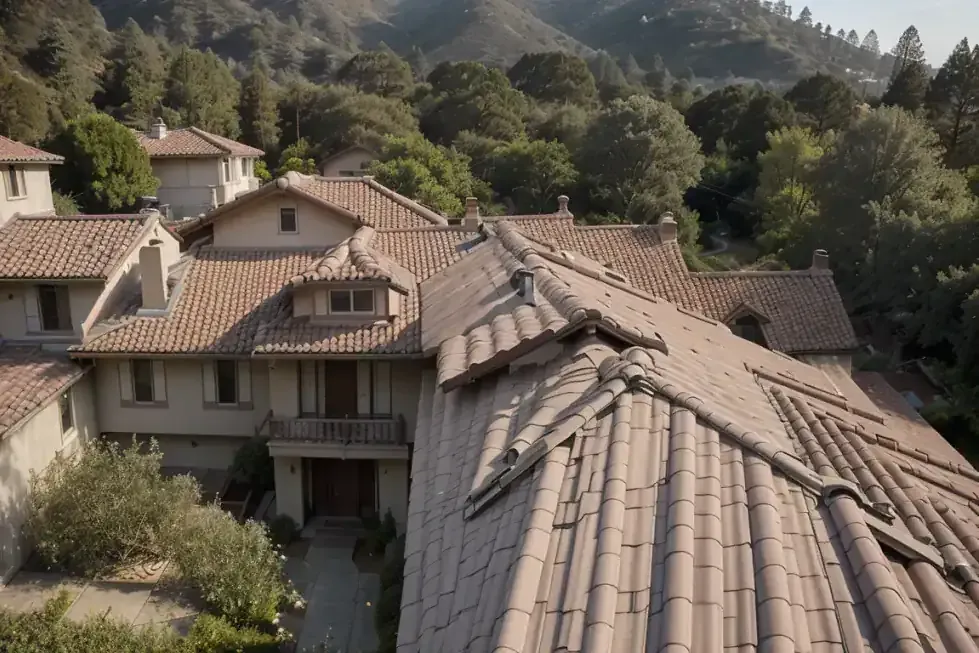
Roofing in San Leandro, CA
San Leandro sits at roughly 50 feet of elevation in Alameda County, where mild wet winters and dry summers set the rhythm for every rooftop in town.
Call (415) 753-4712Serving San Leandro and
That daily moisture cycle matters more than most homeowners realize. Housing stock here splits cleanly by era. Broadmoor and Mulford Gardens hold post-war stucco tract homes.
Bonaire and Halcyon carry mid-century ranch homes from the 1950s. Fairmont Terrace and Washington Manor mix Craftsman bungalows from the 1920s and 1930s with later infill.
Each era fails differently. Consider the common patterns:
- 1950s ranch roofs often sit on original skip-sheathing or thin plywood decking that sags between rafters. - Bungalow-era homes carry low-pitch hips and gables where felt and tar paper have long since dried out. - Stucco tract homes hide step flashing behind wall stucco, so leaks surface indoors before anyone sees them outside. Weather exposure is real but seasonal. Heavy rain and windstorms drive water sideways into eave lines, soffits, and fascia. Fog keeps attic spaces damp enough that poor ventilation invites rot along the ridge beam. Dry summers then bake asphalt shingle and mastic until they crack. The Hayward Fault adds a structural dimension. Moderate earthquake risk means roof deck fastening and truss connections deserve scrutiny on any older home. One local footnote: San Leandro took a direct hit from the 1958 tornado, part of a rare Bay Area outbreak. Wind events here are uncommon, but they happen. Typical failure modes follow from all of this:
- Wind-driven rain pushing past drip edge at the eave. - Failed pipe boot and vent boot seals on 20-year-old asphalt roofs. - Ridge vent and soffit vent imbalance trapping moist air in the attic. - Cracked pipe flashing and chimney flashing after seasonal thermal movement. - Moss and debris dams in valleys on shaded north slopes near the hills. A roofer working here reads the roofline first, then the attic. San Leandro Hills homes face more wind exposure than flats near the marina. Lake Chabot and Chabot Regional Park properties deal with tree debris and shade. Every roof inspection should account for both.
What Roofing Work in San Leandro Includes
Scope on a San Leandro roof starts with a proper roof inspection. That means walking the plane, not just photographing it from the driveway.
A roofer checks the roof deck from the attic side too, looking at sheathing, rafters, and joist condition.
Inspection findings drive the roof estimate. Expect a written scope that separates tear-off, decking repair, and finish materials. Vague line items are a warning sign.
Tear-off and prep follow a set sequence:
- Remove existing shingle, underlayment, and roofing felt down to the substrate.
- Inspect plywood or OSB sheathing and mark soft spots for replacement.
- Replace rotted fascia, soffit, and any compromised rafter tails.
- Stage a dumpster for debris and protect landscaping below the eave.
Decking repair comes next. Crews fasten new plywood or OSB with the correct nail pattern, then address any sagging between trusses.
A pry bar and roofing shovel handle the old layers; a nail gun and air compressor speed the redeck.
Underlayment selection matters in this climate. Synthetic underlayment outperforms tar paper on the foggy morning cycle.
Ice-and-water shield belongs in valleys and along eaves where wind-driven rain collects. Housewrap-style vapor barrier placement depends on attic ventilation design.
Finish work depends on the system chosen. Asphalt shingle work covers three-tab shingle and architectural shingle alike, each nailed to the manufacturer's pattern.
Metal panel options include standing-seam panel and corrugated panel.
Flat or low-slope sections may call for membrane systems such as TPO, EPDM, or PVC membrane over a built-up roof base.
Flashing details decide whether the roof lasts. That includes:
- Drip edge along every eave and rake.
- Step flashing and counter-flashing at sidewalls.
- Chimney flashing and apron flashing at masonry.
- Pipe flashing and boot flashing at penetrations.
- Valley flashing where planes meet.
Ventilation gets finished too. Ridge vent paired with soffit vent keeps the attic breathing.
A rooftop attic fan may be added on older homes with poor passive flow.
Cleanup closes the job. Crews magnet-sweep for nails and fasteners, haul debris, and clear gutters and downspouts of shingle grit.
Scaffold and ladder placement should avoid gutter and downspout damage.
This site does not perform the work. Use this scope as a checklist when vetting any roofing contractor.
Questions about your roof?
Call (415) 753-4712Quality & Materials Standards
Material choice in San Leandro should match pitch, sun exposure, and wind load. Architectural shingle is the common baseline on gable and hip roofs.
Three-tab shingle remains a budget option but ages faster under fog-and-sun cycling.
Steeper or visible planes sometimes justify clay tile, concrete tile, or slate. Each adds weight, so the truss and rafter system must be verified first.
Wood shake and cedar shake appear on some older bungalows, though maintenance demands are higher.
Low-slope sections need different thinking:
- Modified bitumen works on small flat areas and porch roofs.
- TPO or PVC membrane suits larger low-slope planes.
- EPDM remains a durable single-ply choice in mild climates.
- Built-up roof systems still appear on older commercial-adjacent structures.
Fasteners and sealants carry real weight. Galvanized nails and screws resist corrosion better near the marina fog belt.
Sealant and caulk should be rated for exterior exposure; mastic and roof cement are patches, not permanent fixes.
Building code compliance is not optional. Alameda County and local permitting govern sheathing thickness, fastener spacing, and ventilation ratios.
A roofing contractor should pull permits and show inspection sign-offs. Ask for the manufacturer's installation spec in writing.
Insurance claims deserve honest handling. Storm damage from wind or heavy rain may qualify, but documentation matters. Photograph interior stains before repair. Keep receipts.
Do not let anyone promise a claim outcome before an adjuster sees the roof.
Watch for these shortcuts:
- New shingle laid over old roofing felt without decking inspection.
- Missing ice-and-water shield in valleys.
- Sealant smeared over failed pipe flashing instead of replacement.
- No drip edge at the eave or rake.
- Ridge cap skipped in favor of folded shingle.
A sound roof here is a system: decking, underlayment, flashing, ventilation, and finish working together. Verify each layer.
Ask what happens at the chimney, the skylight, and the dormer. Good answers are specific.
Seasonal and Storm Exposure in San Leandro
San Leandro runs on a two-speed weather year, and roofs here pay for both gears.
From November through March, Pacific fronts push heavy rain and wind across the flats near the Marina.
Morning fog off the Bay keeps shingles and stucco damp well past sunrise.
Dry summers then bake that moisture out fast.
The cycle of wet-then-baked is what ages a rooftop in 94577, 94578 and 94579 far quicker than steady sun or steady rain alone.
Mid-century ranch homes from the 1950s sit on low-slope sections where water lingers. Three-tab shingle and asphalt shingle fields from that era are often brittle now.
Granule loss shows up in gutters and at downspout mouths long before a leak appears inside.
Fog is the quiet problem. Damp mornings feed moss along the north rake and in shaded valleys.
Moisture creeps under lifted tabs, then a windstorm peels them back.
The 1958 tornado reminded this city that rare, violent wind is possible.
Loose ridge cap and failed sealant on pipe flashing are the first things to go.
Clay tile and concrete tile roofs in the hills shrug off sun but crack under falling limbs.
Wood shake and cedar shake dry out and split, especially on south-facing slopes.
Timing the inspection matters. Book a roof inspection in late fall, before the first heavy front, to catch lifted shingle and worn sealant.
A second look after the rainy season finds what the storms moved.
- Check after each windstorm: ridge vent, drip edge, and step flashing at walls.
- Clear debris from valleys and behind chimney flashing before November rain.
- Re-seat loose pipe boots and skylight flashing while the deck is dry.
Questions about your roof?
Call (415) 753-4712Local Service Areas
Broadmoor
Broadmoor's post-war stucco tract homes went up fast and share similar rooflines, so one failing material often repeats down the block.
Low-slope sections and shallow gable roofs make drainage the recurring issue here.
- Stucco-clad walls meeting low-slope roof sections trap water at the eave and soffit.
- Original three-tab shingle fields are near the end of their life and lose tabs in wind.
- Flat-to-slope transitions rely on old flashing and tar that cracks in summer heat.
- Compact lots push debris into gutters and downspouts during fall windstorms.
Mulford Gardens
Mulford Gardens mixes older homes with additions, and those additions often created awkward roof intersections.
Improperly tied-in rafters and reused flashing are common finds on a roof inspection.
- Addition rooflines meeting the original hip or gable create leak-prone valleys.
- Reused step flashing at wall junctions fails where sealant was relied on instead.
- Plywood or OSB sheathing under patched areas can show soft spots near the fascia.
- Older tar-and-gravel sections need checking for ponding after heavy rain.
Bonaire
Bonaire's mid-century ranches have broad, low-slope rooftops that shed water slowly. Standing water after a storm is the clearest warning sign a homeowner will see.
- Low-slope built-up roof and modified bitumen sections pond near scuppers and drains.
- Aged membrane seams lift and let water track under the surface.
- Fascia and soffit boards soften where gutters overflow during winter fronts.
- Converted patios leave flat roofs with thin pitch and weak flashing at the tie-in.
Halcyon
Halcyon sits closer to the hills, where tree cover and morning fog combine.
Shaded slopes stay damp, and moss and rot move faster than on open roofs.
- Wood shake and cedar shake on shaded slopes hold moisture and grow moss.
- Tree limbs over the ridge and valleys drop debris that dams water.
- Fog-fed dampness rots fascia and soffit before a leak shows inside.
- Skylight and dormer flashing on older homes often needs resealing.
Fairmont Terrace
Fairmont Terrace's hillside homes face more wind and tree exposure than the flats. Steeper pitches and larger roof planes catch gusts and falling limbs.
- Steep gable and hip roofs shed rain well but catch wind at the ridge and rake.
- Clay tile and concrete tile crack when limbs fall, opening paths for water.
- Ridge cap and ridge vent fasteners loosen after windstorms.
- Chimney flashing and counter-flashing on hillside homes often show gaps.
Washington Manor
Washington Manor is largely post-war stucco tract housing with straightforward gable roofs. Uniform construction means predictable wear, but also shared weak points.
- Original asphalt shingle roofs show curling and granule loss across whole blocks.
- Pipe boots and vent boots crack and let water into the attic.
- Gable-end fascia and rake boards take wind-driven rain during winter storms.
- Attic ventilation gaps let heat build and shorten shingle life.
Get a San Leandro Roof Assessment
Before the next storm season, get a clear picture of what your rooftop can handle.
Ask any roofing contractor for a written roof estimate that names the materials, the flashing details, and the building code items they will address.
Verify licensing and insurance in writing, and confirm how debris and dumpster removal are handled.
Whether the issue is a tired shingle field, a cracked tile, or a membrane seam, a proper roof inspection tells you what to fix now versus later.
Call (415) 753-4712 or reach out through the contact form to start.
Questions about your roof?
Call (415) 753-4712Services in San Leandro
Roof Repair
Professional roof repair services in San Leandro.
Roof Inspection
Professional roof inspection services in San Leandro.
Roof Replacement
Professional roof replacement services in San Leandro.
Gutter Installation
Professional gutter installation services in San Leandro.
Metal Roofing
Professional metal roofing services in San Leandro.
Roof Leak Detection
Professional roof leak detection services in San Leandro.
Storm Damage Repair
Professional storm damage repair services in San Leandro.
Commercial Roofing
Professional commercial roofing services in San Leandro.
Insurance Claim Assistance
Professional insurance claim assistance services in San Leandro.
Tile Roofing
Professional tile roofing services in San Leandro.
Fascia Soffit Repair
Professional fascia soffit repair services in San Leandro.
Roof Ventilation
Professional roof ventilation services in San Leandro.
Shingle Roofing
Professional shingle roofing services in San Leandro.
Emergency Roof Repair
Professional emergency roof repair services in San Leandro.
Skylight Installation
Professional skylight installation services in San Leandro.
Roof Coating
Professional roof coating services in San Leandro.
Compare Written Estimates in San Leandro
Independent Local Providers and provider-held · serving California
Call (415) 753-4712