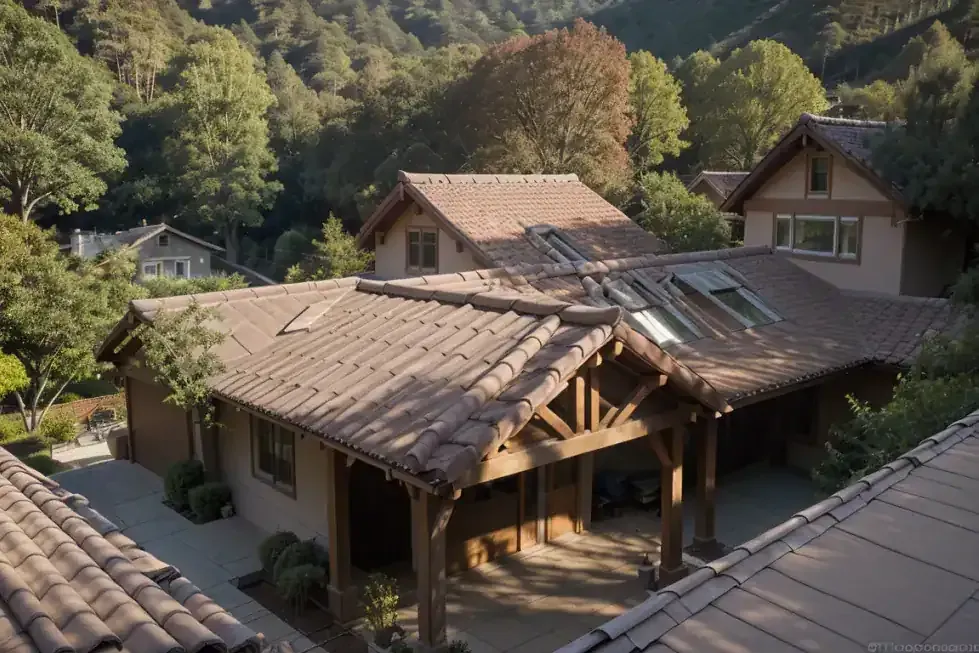
Roofing in San Rafael, CA
San Rafael's roofing story starts with two very different neighborhoods.
Call (415) 753-4712Serving San Rafael and
Hipped, steep-gabled and mansard forms show up on those documented houses. Roofers working there deal with steep pitch, complex valleys and decorative trim.
Terra Linda is the other bookend. Eichler tract houses built 1955–1956 and 1959–1961 fill the Terra Linda Valley.
A CEQA historic resource study documents their flat and shallow-pitched front-gable roofs. Low slope changes everything about materials and drainage.
Between them sit Montecito, Peacock Gap, Sun Valley and the West End, each with its own mix of roof forms and ages.
Marin's climate adds its own pressure. Leaf and needle accumulation packs roofs and gutters, holding moisture against shingles and decking.
The city explicitly warns that even fire-rated roofs can be exposed when embers ignite that debris.
That makes debris management a roofing concern, not just a landscaping one. Typical failure modes here include:
- Ponding and membrane seam failure on low-slope Eichler roofs. - Dry-rotted fascias and soffits where gutters back up. - Cracked or slipped shingles on older steep-slope roofs after wind. - Flashing failures at valleys, chimneys and skylights. - Clogged downspouts forcing water under eave edges. Roofing permits are issued by the City of San Rafael Building Division, and re-roof permits are required. The minor permit category covers reroofs without rooftop equipment removal or replacement. It allows only one overlay and requires compliant roof drains and attention to attic ventilation. Roof form changes on Eichler and Alliance homes in the -EA overlay go through Administrative Design Permit review.
What Roofing Work in San Rafael Includes
A roof inspection starts with the deck, not the surface. A roofer checks sheathing condition, rafter and truss soundness, and whether prior overlays hide rot.
Attic ventilation gets measured, since trapped heat shortens membrane life on low-slope roofs.
Material selection follows roof form and pitch.
Terra Linda's shallow front-gable roofs often take a membrane — TPO, EPDM or PVC membrane — or a built-up roof with modified bitumen.
Steep Victorian roofs in Gerstle Park typically suit asphalt shingle, architectural shingle, or historically appropriate slate, clay tile or cedar shake.
The scope typically covers:
- Tear-off of existing layers, with debris hauled in a dumpster.
- Deck repair or replacement in plywood or OSB where sheathing has failed.
- Underlayment, synthetic underlayment, and ice-and-water shield at valleys and eaves.
- Drip edge, eave and rake trim, and fascia repair.
- Flashing at chimneys, step flashing, counter-flashing and pipe boots.
- Ridge cap, ridge vent or soffit vent for balanced ventilation.
- Gutter and downspout reattachment or replacement.
Crews work from ladders and scaffold, using nail guns, pry bars and roofing shovels.
Sealant, caulk and roof cement close small details, but proper flashing — not mastic — does the waterproofing.
Cleanup means magnet sweeps for nails and fasteners, debris removal, and a final gutter flush. Ask any roofing contractor what their cleanup actually includes before signing.
Questions about your roof?
Call (415) 753-4712Quality & Materials Standards
Building code sets the floor, not the ceiling. California code and local permit conditions govern underlayment, fastener schedules and ventilation ratios.
On San Rafael's older homes, matching existing roof pitch and eave overhang matters as much as the material itself.
Material honesty matters. Three-tab shingle is economical but short-lived on sun-exposed slopes. Architectural shingle lasts longer and handles wind better.
Standing-seam panel and corrugated panel suit some low-slope applications, though panel expansion needs room. On flat Eichler roofs, membrane seams and drain details decide performance.
Watch for these failure points:
- Poorly lapped roofing felt or tar paper under new shingles.
- Missing ice-and-water shield at valleys and low-slope transitions.
- Nailed-through flashing instead of proper step and counter-flashing.
- Inadequate attic ventilation causing condensation and rot.
- Reused pipe boots and vent boots that crack within a season.
Insurance claims deserve plain language. Storm damage may be covered; wear and tear usually is not.
Document the damage with photos before repairs, keep receipts, and get a written roof estimate that separates tear-off, materials and labor.
A roofer should explain what the adjuster will and won't accept.
Ask for proof of license and insurance, a written scope, and manufacturer warranty terms in writing.
Verify the permit is pulled in the homeowner's name through the Building Division.
Repair-only exemptions exist, but the threshold is unclear — confirm before skipping a permit.
Seasonal and Storm Exposure in San Rafael
San Rafael's wet season runs roughly November through March, and the rain rarely arrives politely.
Atmospheric river events stack days of steady soak onto brief, intense bursts.
Roofs here absorb that pattern year after year, and the failures show up in predictable places.
Midcentury front-gable roofs across the Terra Linda Valley sit flat or shallow-pitched by design. Water lingers on them longer than on steep roofs.
Standing water finds every weak flashing detail and tired sealant joint.
Leaf and needle accumulation is the quiet problem. Debris packs gutters, downspouts and roof valleys, holding moisture against the deck.
The city itself warns that even a fire-rated roof can be exposed when embers ignite that debris.
That is a year-round concern, not just a fall chore.
Victorian-era roofs in Gerstle Park bring a different stress profile.
Steep hips, gables and mansard forms shed water well, but their many valleys and penetrations create dozens of places for flashing to fail.
Timing the inspection matters more than the inspection itself.
- Late October: clear debris and check gutters before the first storms.
- January, after a heavy stretch: look for ceiling stains and attic dampness.
- Early spring: inspect sealant, flashing and shingle granule loss while it is dry.
- After any wind event: check ridge caps, ridge vents and loose fasteners.
Watch for these warning signs between visits:
- Curling or missing shingles on sun-facing slopes.
- Granules collecting in gutters, a sign of aging asphalt.
- Stained sheathing or rafters visible from the attic.
- Lifted drip edge or soffit damage at the eave line.
Questions about your roof?
Call (415) 753-4712Local Service Areas
Gerstle Park
Gerstle Park holds Victorian-era houses from the 1860s to the 1880s, including Carpenter Gothic, Italianate, Stick and Second Empire examples.
Those rooflines carry steep hips, gables and mansard forms that reward careful detailing.
- Original wood shake and cedar shake on older Victorians, often layered over aging felt.
- Decorative trim at the rake and fascia that hides failing step flashing.
- Mansard and gambrel sections where valleys trap debris and slow drainage.
- Slate or clay tile on a few grander houses, needing specialized repair knowledge.
- Chimney flashing and dormer penetrations that open up after decades of movement.
Terra Linda
Terra Linda is Eichler tract house country, built 1955 to 1956 and again 1959 to 1961.
Flat and shallow-pitched front-gable roofs define the Terra Linda Valley midcentury neighborhood, documented in a CEQA historic resource study.
- Low-slope membrane roofs, often built-up or modified bitumen, reaching end of service life.
- Ponding water at scuppers and drains where pitch was never generous.
- Seam failures and blistering on older tar-and-gravel assemblies.
- Ridge and gable transitions where flashing meets the front-facing roofline.
- Roof form changes that route through Administrative Design Permit review in the -EA overlay.
Montecito
Montecito blends midcentury and later ranch homes under a warm, sheltered canopy of mature trees. Shade is lovely; the debris it drops is not.
- Needle and leaf buildup in gutters and valleys that holds moisture on the deck.
- Moss and organic growth on shaded asphalt shingle slopes.
- Rot at fascia and soffit where overflow has run for seasons.
- Pipe boots and vent flashing cracked by age and sun exposure.
- Loose fasteners and lifted shingles after winter wind.
Peacock Gap
Peacock Gap sits close to the water, where salt air and damp mornings work on every exposed surface. Roofs here age differently from inland ones.
- Corrosion on metal fasteners, drip edge and valley flashing.
- Accelerated wear on sealant and caulk at penetrations.
- Standing-seam panel and metal panel systems showing fastener-backed leaks.
- Moss and algae on north-facing slopes that never fully dry.
- Gutter and downspout joints loosening under constant moisture.
Sun Valley
Sun Valley's ranch and split-level homes sit on sun-exposed slopes that bake through summer. Heat, not shade, drives the wear here.
- Thermal cracking and granule loss on three-tab and architectural shingle roofs.
- Brittle, dried sealant at flashing and pipe boots.
- Curling shingles along the ridge and sun-facing rake edges.
- Attic heat buildup where soffit vent and ridge vent airflow is blocked.
- Underlayment deterioration beneath shingles that look fine from the ground.
West End
West End's older, tightly packed houses put roofs close to neighbors and close to the street. Access and detailing both take thought.
- Aging tar paper and felt underlayment beneath original or layered shingles.
- Step flashing and counter-flashing at shared walls and tight side yards.
- Small dormers and canopies with cramped valleys that collect debris.
- Chimney flashing on older masonry stacks that needs periodic re-sealing.
- Overlay limits under city rules, since only one overlay is permitted.
Before hiring, ask any roofing contractor for a written roof estimate, confirmation of the building code requirements that apply, and proof the re-roof permit will be pulled through the City of San Rafael Building Division.
Get a Roof Assessment
San Rafael roofs face debris, storm soak and summer heat in equal measure, and the right fix depends on which one your house fights most.
Start with a roof inspection that documents what is actually failing, not what a sales pitch says.
Call (415) 753-4712 or use the contact form to arrange a visit, then compare written estimates before committing.
Ask what the scope covers, what the permit path looks like, and what happens to your gutters and flashing.
Questions about your roof?
Call (415) 753-4712Services in San Rafael
Roof Repair
Professional roof repair services in San Rafael.
Roof Inspection
Professional roof inspection services in San Rafael.
Roof Replacement
Professional roof replacement services in San Rafael.
Gutter Installation
Professional gutter installation services in San Rafael.
Metal Roofing
Professional metal roofing services in San Rafael.
Roof Leak Detection
Professional roof leak detection services in San Rafael.
Storm Damage Repair
Professional storm damage repair services in San Rafael.
Commercial Roofing
Professional commercial roofing services in San Rafael.
Insurance Claim Assistance
Professional insurance claim assistance services in San Rafael.
Tile Roofing
Professional tile roofing services in San Rafael.
Fascia Soffit Repair
Professional fascia soffit repair services in San Rafael.
Roof Ventilation
Professional roof ventilation services in San Rafael.
Shingle Roofing
Professional shingle roofing services in San Rafael.
Emergency Roof Repair
Professional emergency roof repair services in San Rafael.
Skylight Installation
Professional skylight installation services in San Rafael.
Roof Coating
Professional roof coating services in San Rafael.
Compare Written Estimates in San Rafael
Independent Local Providers and provider-held · serving California
Call (415) 753-4712