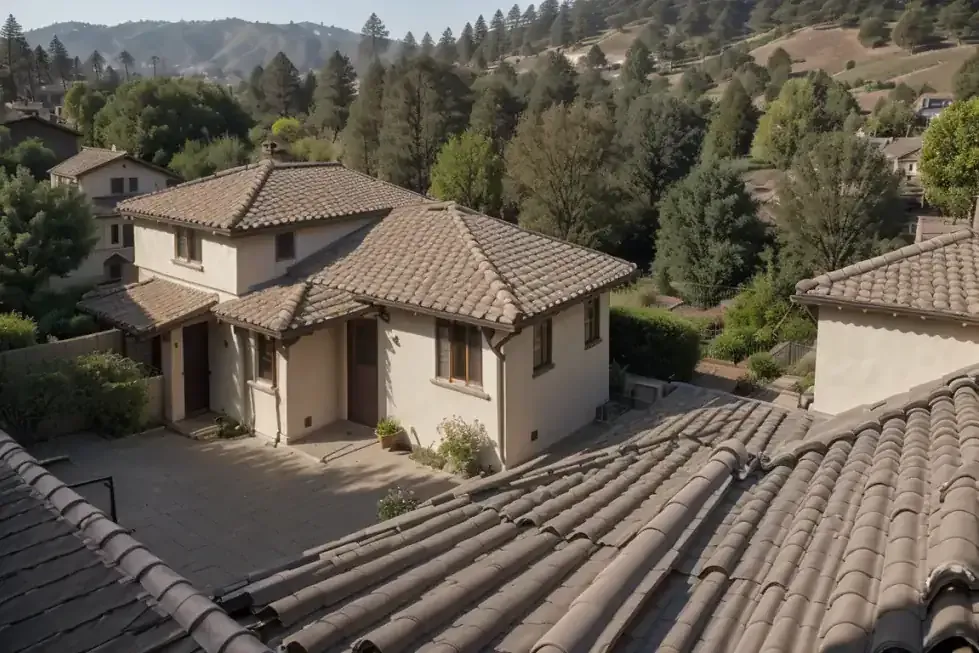
Roofing in San Ramon, CA
San Ramon roofing sits at the intersection of inland heat and wildfire risk.
Summer sun drives solar heat gain into attics across Twin Creeks and Bollinger Hills.
Call (415) 753-4712Serving San Ramon and
That same sun degrades asphalt shingle and sealant year after year. Housing era shapes what a roofer finds up there.
South San Ramon holds 1950s and 1960s ranch houses. Twin Creeks, Bollinger Hills and Inverness Park reflect 1970s expansion.
Later growth in Windemere and Gale Ranch brought Mediterranean Revival architecture with heavy tile roofs.
Climate zone 12 cool roof values apply to single-family reroofs over 50 percent. That changes product selection on low-slope membrane and modified bitumen assemblies.
Homeowners should confirm the rated values before signing a roof estimate. Wildfire ember exposure is the other half of the story.
Parcels in the designated WUI Very High Fire Hazard Area trigger the city reroof handout requirements. Class A coverings are mandatory there.
Ember resistant vents matter as much as the covering itself. Noncompliant vents must be replaced during reroofing. Protected roof valleys are part of the same package.
Typical failure modes in San Ramon include:
- Sun-cracked pipe boots and vent boots on south and west slopes. - Dried sealant and caulk at step flashing and counter-flashing joints. - Brittle three-tab shingle and architectural shingle tabs after repeated heat cycles. - Clogged gutters and downspouts backing water under the eave. - Lifted ridge cap and ridge vent components after wind events. Flat and low-slope sections fail differently. Ponding water stresses membrane seams, and aged tar at parapet terminations opens. A thorough roof inspection separates sun wear from installation defects. Permits come from City of San Ramon Building and Safety Services. A building permit is required when more than 200 square feet of roof covering is installed, repaired or replaced. Solar panel removal for reroofing needs a separate PV reinstatement permit.
What Roofing Work in San Ramon Includes
Scope starts with a roof inspection of the full rooftop. The roofer checks the field, the roofline, and every penetration.
Findings feed the roof estimate, which should list quantities in roofing squares.
A proper inspection covers:
- Decking condition, including plywood and OSB sheathing softness.
- Flashing at walls, chimney flashing and skylight curbs.
- Valley condition and any step flashing or apron flashing damage.
- Attic-side ventilation, including soffit vent and ridge vent airflow.
- Gutter and downspout flow at the eave line.
Tear-off follows. Crews strip the old covering to the substrate, then inspect the roof deck. Rotted sheathing gets replaced and re-nailed.
A pry bar and roofing shovel handle most removal; a dumpster takes the debris.
Underlayment goes down next. Synthetic underlayment has largely replaced roofing felt and tar paper.
Ice-and-water shield protects valleys and low-slope transitions, where an ice dam is less a concern than wind-driven rain backup.
Covering choice depends on slope and architecture:
- Asphalt shingle, from three-tab shingle to architectural shingle, on standard gable roofs.
- Clay tile or concrete tile on Mediterranean Revival homes in Gale Ranch and Windemere.
- TPO, EPDM or PVC membrane on flat and low-slope sections.
- Modified bitumen or built-up roof where a torch-applied or mopped system fits.
Details finish the job. Drip edge runs the eave and rake. Ridge cap closes the ridge.
Sealant, mastic and roof cement handle small terminations that flashing cannot.
Ventilation work may include an attic fan swap or added soffit vent area.
Fasteners — nail, screw and anchor types — must match the substrate and the building code.
Tools on site are ordinary trade equipment. A nail gun and air compressor speed shingle nailing. A ladder or scaffold reaches the eave safely.
Cleanup means magnet sweeps for stray nails and a debris haul-off.
Questions about your roof?
Call (415) 753-4712Quality & Materials Standards
Material standards in San Ramon start with the covering rating. Class A is required in the Very High Fire Hazard Area.
Ember resistant vents and protected roof valleys are checked at inspection.
Cool roof values for climate zone 12 shape low-slope choices. A reflective coating can extend the life of an existing built-up roof.
Coating is not a fix for wet insulation or failed seams.
Structure deserves attention on older ranch homes. The truss, rafter and joist framing may need review before adding tile weight.
A ridge beam or purlin check matters on long spans. Counterbatten and batten systems support tile and shed water.
Underlayment and vapor barrier choices affect moisture performance. Synthetic underlayment outperforms felt in heat.
Ice-and-water shield belongs in valleys and at the eave in wind-driven rain zones.
Detail work separates a good roof from a leak:
- Boot flashing and pipe flashing at plumbing stacks.
- Counter-flashing set into masonry at the chimney.
- Drip edge and fascia protection at the overhang.
- Sealant and adhesive applied per manufacturer specs.
Steep and complex shapes need extra care. A mansard or gambrel profile, a small canopy or awning, and a dormer all add flashing junctions.
Hip and verge edges, plus the rake line, take wind load.
Winter and fire both touch the hardware list. A snow guard is rare here but appears on some steep tile.
Every anchor point must be sealed and weatherproofing checked before closeout.
Insurance vocabulary matters for homeowners. A roofing contractor should document storm damage with photos and a written scope.
Ask whether the claim covers the full roof or only damaged slopes.
Verify before hiring:
- Active license and current insurance certificates.
- Written scope listing materials, underlayment and flashing details.
- Permit pulled by the contractor, not the homeowner.
- Clear payment terms tied to inspection milestones.
Seasonal and Storm Exposure in San Ramon
Summer in San Ramon’s inland valleys pushes attic temperatures hard, and solar heat gain drives the climate zone 12 cool roof values that apply to single-family reroofs over 50 percent.
Asphalt shingle granules wear faster under that load. Tile holds up but sheds underlayment life quietly beneath it.
By afternoon the rooftop radiates heat into the sheathing below.
Over time that cycling stresses felt, sealant at the pipe boot, and any caulk left to harden at the counter-flashing.
Wildfire ember exposure in the designated Very High Fire Hazard Area shapes the rest of the year.
The city reroof handout requires Class A coverings, ember resistant vents, and protected roof valleys. Existing noncompliant vents must be replaced during reroofing.
Wind-driven rain finds the weak points first: valley flashing, chimney flashing, and the drip edge along each eave and rake.
A missing vent boot or cracked apron flashing shows up as a ceiling stain after the first real storm.
Inspect timing follows the seasons closely.
- Late winter: check for ice dam evidence at the north overhang, plus lifted shingle tabs.
- Early spring: look for granule loss in gutters and downspouts, and popped fasteners.
- Before fire season: confirm vent screens and valley protection in the WUI.
- After the first fall rain: recheck skylight flashing and step flashing at walls.
Flat and low-slope sections need their own rhythm. A TPO or modified bitumen membrane may pond and pull at seams, and standing water finds the scupper.
Probes and a proper roof inspection catch seam lifting before it becomes a leak.
Questions about your roof?
Call (415) 753-4712Local Service Areas
Twin Creeks
Twin Creeks was built during the 1970s expansion, and its roofs are now several decades into service.
Original materials rarely tell you their true condition without a close look.
- Composition asphalt shingle roofs here often show brittle three-tab shingle tabs and granule loss at the ridge.
- Failing underlayment beneath tile lets water travel unseen along the roof deck before it stains the ceiling.
- Valley and step flashing at wall intersections are common leak entry points after wind-driven rain.
- Attic ventilation and soffit vent screens are worth checking for ember exposure and heat buildup.
Bollinger Hills
Bollinger Hills also reflects 1970s building, and many homes still carry original or first-replacement roofing.
Looking at the fascia and overhang often reveals what the field surface hides.
- Weathered fascia and soffit boards show hidden moisture where the drip edge was never replaced.
- Aging pipe boots and vent boots crack and split, turning a small gap into a steady leak.
- Original plywood or OSB sheathing may soften where felt has failed under the shingle.
- Ridge cap and hip details are typical first failures on these older rooflines.
Inverness Park
Inverness Park shares the 1970s expansion era, with a mix of roof pitches and later additions. Additions and skylights are frequent trouble spots.
- Dormer and skylight flashing around older additions often relies on tired mastic and caulk.
- Step flashing and counter-flashing at sidewalls need checking after the first fall storms.
- Mixed shingle vintages across a single rooftop make even wear hard to judge.
- Loose fasteners and popped nails signal deck movement worth inspecting before the next wet season.
Gale Ranch
Gale Ranch reflects San Ramon’s later growth, where Mediterranean Revival architecture is prevalent. Tile and steep pitches dominate the streetscape.
- Clay tile and concrete tile systems hide underlayment condition; a failing substrate shows only after leaks start.
- Steep hips and ridges concentrate wind uplift, testing every fastener and batten.
- Tile roofs need careful walk-through; cracked tile and displaced pieces point to larger issues.
- A rooftop here may include a small flat section where membrane or modified bitumen seams deserve a look.
Windemere
Windemere is the newest of these neighborhoods, with Mediterranean Revival styling and complex rooflines. Newer age does not remove maintenance needs.
- Complex hips, gables, and multiple valleys create many opportunities for flashing failure.
- Decorative overhangs, canopy, and awning structures collect debris and hide moisture.
- Dormers and skylights on these homes need flashing checked after every heavy rain.
- Flat or low-slope accents may use TPO or a PVC membrane, where seam and ponding checks matter.
Get a San Ramon Roof Assessment
Before you sign anything, ask a roofing contractor for the scope in writing: what the roof estimate covers, which building code items apply, and whether a separate PV reinstatement permit is needed if solar panels come off.
Confirm Class A coverings and ember resistant vents if the parcel sits in the Very High Fire Hazard Area.
Call (415) 753-4712 or use the contact form to start a conversation about your rooftop.
Questions about your roof?
Call (415) 753-4712Services in San Ramon
Roof Repair
Professional roof repair services in San Ramon.
Roof Inspection
Professional roof inspection services in San Ramon.
Roof Replacement
Professional roof replacement services in San Ramon.
Gutter Installation
Professional gutter installation services in San Ramon.
Metal Roofing
Professional metal roofing services in San Ramon.
Roof Leak Detection
Professional roof leak detection services in San Ramon.
Storm Damage Repair
Professional storm damage repair services in San Ramon.
Commercial Roofing
Professional commercial roofing services in San Ramon.
Insurance Claim Assistance
Professional insurance claim assistance services in San Ramon.
Tile Roofing
Professional tile roofing services in San Ramon.
Fascia Soffit Repair
Professional fascia soffit repair services in San Ramon.
Roof Ventilation
Professional roof ventilation services in San Ramon.
Shingle Roofing
Professional shingle roofing services in San Ramon.
Emergency Roof Repair
Professional emergency roof repair services in San Ramon.
Skylight Installation
Professional skylight installation services in San Ramon.
Roof Coating
Professional roof coating services in San Ramon.
Compare Written Estimates in San Ramon
Independent Local Providers and provider-held · serving California
Call (415) 753-4712