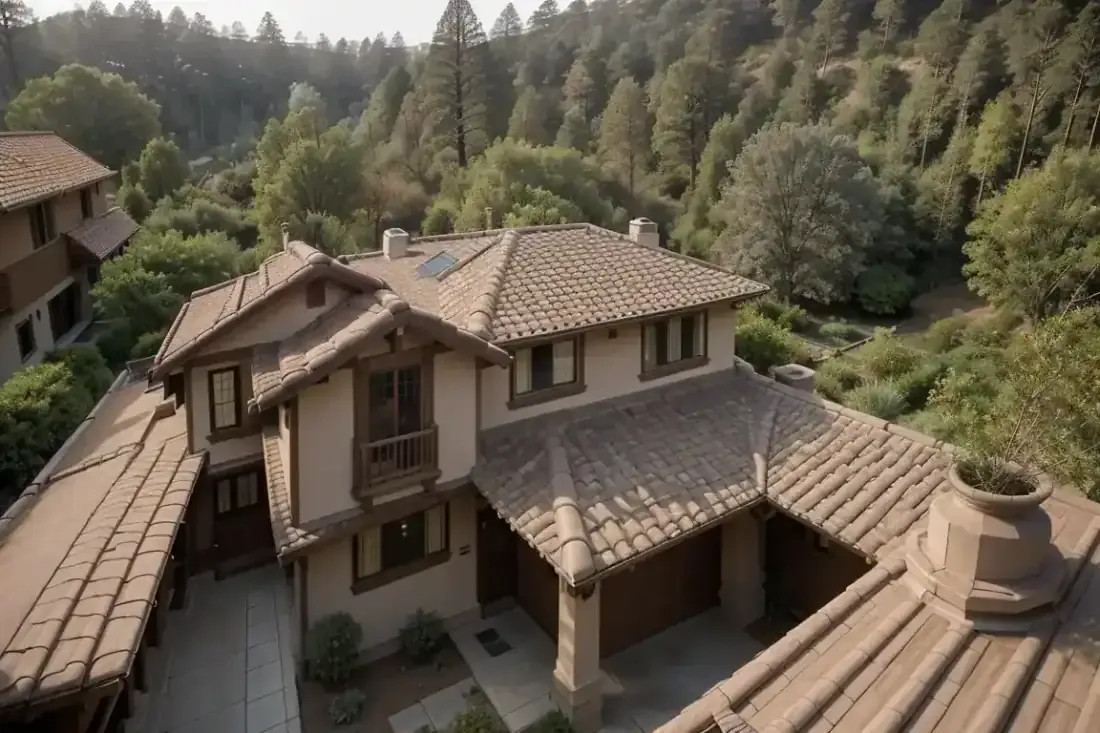
Roofing in Walnut Creek, CA
Walnut Creek sits against Mount Diablo, and that geography drives the roofing story.
Call (415) 753-4712Serving Walnut Creek and
Mid-century ranch houses dominate neighborhoods like Northgate and Parkmead, with low-pitch rooflines and wide eaves.
In Rancho San Miguel, Eichler-designed modern homes carry low-slope roofs that need membrane systems rather than shingle.
Rossmoor opened in 1964, and its condominiums and cooperatives include buildings dating to the 1960s. Those shared roofs need careful coordination among owners.
Summer is the first stress test. Prolonged, dry sun bakes asphalt shingle and cedar shake, drying out sealant and curling tab edges.
UV degradation shortens service life on any south-facing slope.
Heat also works on attic ventilation, and a stalled soffit vent can cook the roof deck from below. Winter brings atmospheric rivers.
Heavy rain finds every weakness in flashing, underlayment and valley details.
Failed pipe boot or chimney flashing shows up as a ceiling stain weeks after the storm. Clogged gutter and downspout assemblies back water under the eave.
Occasional offshore winds add uplift risk. Loose ridge cap, lifted drip edge and under-driven fastener become a wind claim waiting to happen.
Wind-driven rain can push past worn mastic at a skylight or dormer. Typical failure modes in Walnut Creek:
- Sun-cracked and curled asphalt shingle on west- and south-facing planes
- Brittle, split wood shake after years of dry heat
- Failed pipe flashing and step flashing letting water into sheathing
- Ponding on low-slope roofs where the membrane or drain has aged
- Wind-lifted ridge cap and loose rake trim after offshore events
Age matters as much as weather. A 1960s Rossmoor building may still have its original built-up roof or early modified bitumen layers.
Tear-off depth and deck condition become the real variables in any roof estimate there.
What Roofing Work in Walnut Creek Includes
Roof work here starts with a roof inspection, not a sales visit.
The roofer walks the pitch, checks the attic for staining and ventilation, and photographs the flashing details.
That inspection should name the material, the age, and what is actually failing.
Materials follow the roof type. A steep-slope ranch house takes architectural shingle over synthetic underlayment and ice-and-water shield at the valleys and eaves.
An Eichler-style low-slope roof in Rancho San Miguel more often calls for TPO, EPDM or a PVC membrane, sometimes a built-up roof with modified bitumen.
Scope on a typical tear-off:
- Strip old roofing to the sheathing; replace rotted plywood or OSB decking
- Install underlayment, drip edge, valley flashing and ice-and-water shield
- Set new shingle, tile or membrane; finish ridge, hip and rake details
- Add ridge vent and soffit vent for balanced attic ventilation
- Haul debris in a dumpster; magnet-sweep nails from gutters and beds
Steep-slope crews work from scaffold and ladder with a nail gun and air compressor.
Pry bar and roofing shovel handle tear-off; torch or mastic sets modified bitumen details.
Flat work is measured in roofing square and inspected for seams, scupper and parapet coping.
Repairs are their own scope. A pipe boot, boot flashing or counter-flashing replacement is small but high-value work.
Chimney flashing and skylight seals get rebuilt with new step flashing and sealant rather than smeared caulk.
Cleanup is part of the job. A finished roof leaves no fastener, debris or tar smear on the gutter, and the downspout runs clear.
Ask what the estimate covers and what it treats as an add-on.
Questions about your roof?
Call (415) 753-4712Quality & Materials Standards
Standards begin with the substrate. New roofing is only as good as the decking under it.
Soft spots in plywood or OSB mean the sheathing gets replaced before any underlayment goes down.
Underlayment choice matters in a wet-winter climate. Synthetic underlayment outperforms old tar paper and roofing felt in tear strength.
Ice-and-water shield belongs at the eaves, valleys and any low-slope transition.
Fastener placement decides wind performance. Nail or screw spacing follows the shingle manufacturer's spec, driven flush through the sheathing into a rafter or truss where required.
Over-driven fastener crushes the mat; under-driven leaves a wind catch.
Flashing is where most leaks begin:
- Step flashing woven into the shingle courses at a sidewall
- Counter-flashing set into a masonry joint above
- Apron flashing at a chimney base, sealed against water
- New pipe flashing at every vent penetration
California building code sets minimums for underlayment, ventilation and fire rating. A roofing contractor should pull the permit and post it.
Coastal and fire-rated materials may apply near open space like Shell Ridge.
Honest claims matter. Roof cement and caulk are patching tools, not waterproofing. A coating over a failing membrane buys time, not a new roof.
Ask for a written roof estimate that separates repair from replacement.
Insurance vocabulary is worth knowing. A claim usually distinguishes sudden storm damage from wear and long-term neglect.
Wind uplift or a fallen limb may qualify; sun-aged shingle rarely does. Document the damage with photos before any repair.
Before hiring, verify the roofing contractor's license, insurance and written scope. Confirm the warranty terms in writing.
A good roofer explains the roofline, pitch and drainage honestly, and stands behind the work in writing.
Seasonal and Storm Exposure in Walnut Creek
Summer in Walnut Creek is a test of patience for any roof. Months of cloudless heat bake the rooftop from morning until late afternoon.
Asphalt shingle granules loosen under that sustained exposure. Architectural shingle surfaces chalk and gray. On a low-slope membrane, seams can pull.
Then autumn arrives, and the first atmospheric river rewets everything the sun dried out. Heat-cycled sealant around pipe flashing cracks. Water finds the gap.
Winter storms push hard against a south or west facing rake, and wind-driven rain works at step flashing.
Offshore winds add a third stressor. When they funnel toward Mount Diablo, uplift pressure rises at the eave and along the ridge.
Loose ridge cap and aged fasteners become a real risk.
On mid-century homes, the original plywood roof deck may be near the end of its life.
Repeated wet-dry cycles soften the sheathing under old tar paper or roofing felt.
By the time a stain shows on the ceiling, the underlayment is often long gone.
Timing the roof inspection matters here. Late summer, before the first storm, is the window to catch sun damage.
A roofer can check the drip edge, valley flashing and vent boot while the roof is dry.
Post-storm checks in January and February catch what the rain exposed.
- Late summer: inspect shingle, sealant and rooftop seal points before rain returns
- After the first heavy storm: look for ceiling stains, gutter overflow and soffit water
- Spring: clear debris from valleys and check for wind-lifted ridge cap or shingle
Questions about your roof?
Call (415) 753-4712Local Service Areas
Northgate
Northgate's postwar ranch houses sit on generous lots with low-pitch hip and gable rooflines.
Decades of sun have left many original roofs at the end of their service life.
That makes a careful roof inspection a sensible first step before any roof estimate.
- Mid-century ranch roofs often still carry three-tab shingle that has lost its granule layer.
- Failing tar paper underlayment shows as curled or brittle edges along the eave.
- Sun-baked fascia and soffit boards soften where attic ventilation is poor.
- Loose fasteners at the drip edge let water track back under the first course.
Rossmoor
Rossmoor opened in 1964, and its condominium and cooperative buildings show their age in the roofing details.
Shared roofs mean the roofing contractor must coordinate with the HOA before work begins. Verify who owns the roof before signing anything.
- Buildings from the 1960s often use built-up roof or modified bitumen on flat sections.
- Blistered membrane and open seams appear where ponding water sits.
- Aging pipe flashing and vent boot seals fail quietly above interior units.
- Skylight and parapet flashing on flat rooftops collect debris and trap moisture.
- Older metal panel and gutter systems rust at the downspout joints.
Parkmead
Parkmead's ranches and small Eichler-style homes mix pitched and low-slope roofs on the same block. Low-slope sections demand a membrane that handles standing water.
Homeowners here should ask which substrate and coating a bid actually specifies.
- Low-slope Rancho-style roofs may use TPO or PVC membrane rather than shingle.
- Weathered tar and bitumen at seams crack first after a hot summer.
- Plywood or OSB sheathing under old felt often needs replacement, not a patch.
- Poor attic ventilation lets heat build and shorten membrane life.
- Dormer and valley transitions are common leak points on these compact plans.
Rudgear Estates
Rudgear Estates homes sit closer to the open foothills, where wind and sun both work the rooftop.
Afternoon heat and seasonal gusts stress the ridge and rake edges. A roofer should check ridge cap and fasteners on every visit.
- Sun exposure fades architectural shingle and dries out sealant strips.
- Offshore wind gusts lift loose ridge cap and expose nails at the rake.
- Wood shake and cedar shake roofs weather unevenly near the open space.
- Gutter and downspout runs clog with debris blown off the hillside.
Lakewood
Lakewood's tract homes rely on standard gable roofs with asphalt shingle and tile options. Consistent subdivision construction means shared failure patterns across the block.
A neighbor's leak often points to the same weak detail next door.
- Original three-tab shingle on many homes is past the typical replacement age.
- Concrete tile and clay tile roofs need underlayment replaced before tiles fail.
- Step flashing at sidewalls and chimney flashing are frequent leak sources.
- Valley and hip intersections collect debris that holds moisture against the deck.
Rancho San Miguel
Rancho San Miguel holds some of Walnut Creek's Eichler-designed modern homes with distinctive low-slope roofs. These roofs hide their problems until water reaches the ceiling.
That makes early roof inspection and careful waterproofing essential.
- Low-slope Eichler rooftops often use modified bitumen or built-up roof systems.
- Original tar and gravel surfaces hide cracks that open after hot summers.
- Roofline transitions and parapet edges need fresh counter-flashing and sealant.
- Thin roof deck and limited pitch make ice-and-water shield and underlayment critical.
- Small dormer and canopy details demand careful flashing, not caulk alone.
Get a Roof Assessment Before the Season Turns
Walnut Creek roofs face sun, wind and hard winter rain in the same year.
Whether it's a mid-century ranch, a Rossmoor cooperative building, or a low-slope Eichler home, the right roofer starts with a real roof inspection.
Ask what the bid covers: underlayment, flashing, ventilation and debris removal. Confirm the building code details in writing. Then compare estimates line by line.
Call (415) 753-4712 or use the contact form to request a roof estimate for your Walnut Creek property.
Questions about your roof?
Call (415) 753-4712Services in Walnut Creek
Roof Repair
Professional roof repair services in Walnut Creek.
Roof Inspection
Professional roof inspection services in Walnut Creek.
Roof Replacement
Professional roof replacement services in Walnut Creek.
Gutter Installation
Professional gutter installation services in Walnut Creek.
Metal Roofing
Professional metal roofing services in Walnut Creek.
Roof Leak Detection
Professional roof leak detection services in Walnut Creek.
Storm Damage Repair
Professional storm damage repair services in Walnut Creek.
Commercial Roofing
Professional commercial roofing services in Walnut Creek.
Insurance Claim Assistance
Professional insurance claim assistance services in Walnut Creek.
Tile Roofing
Professional tile roofing services in Walnut Creek.
Fascia Soffit Repair
Professional fascia soffit repair services in Walnut Creek.
Roof Ventilation
Professional roof ventilation services in Walnut Creek.
Shingle Roofing
Professional shingle roofing services in Walnut Creek.
Emergency Roof Repair
Professional emergency roof repair services in Walnut Creek.
Skylight Installation
Professional skylight installation services in Walnut Creek.
Roof Coating
Professional roof coating services in Walnut Creek.
Compare Written Estimates in Walnut Creek
Independent Local Providers and provider-held · serving California
Call (415) 753-4712